ASEAN sets priorities to address transboundary haze pollution in Mekong sub-region

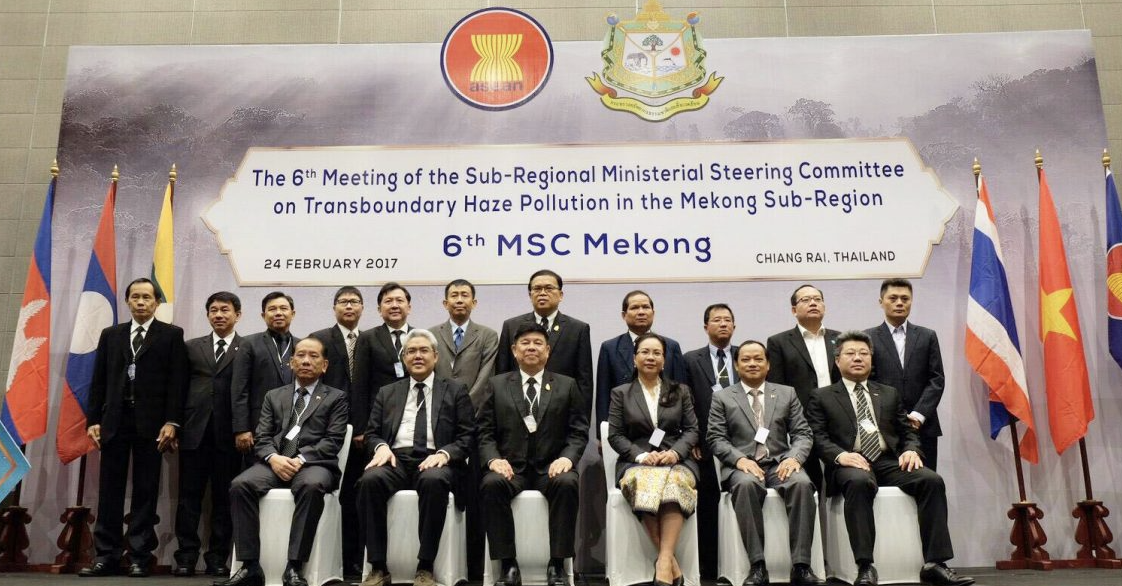
CHIANG RAI, 24 February 2017 – ASEAN Ministers and representatives responsible for land, forest fires and haze from Cambodia, Lao PDR, Myanmar, Thailand and Viet Nam gathered in northern Thailand today to discuss transboundary haze pollution. At the sixth meeting of the Sub-Regional Ministerial Steering Committee on Transboundary Haze Pollution in the Mekong Sub-Region (6th MSC Mekong), the said officials brought forth the Chiang Rai 2017 Plan of Action which set priorities for the work of the MSC Mekong countries in addressing transboundary haze pollution.

“Following the adoption of the Roadmap on ASEAN Cooperation towards Transboundary Haze Pollution Control with Means of Implementation at the 12th Meeting of the Conference of the Parties (COP-12) to the ASEAN Agreement on Transboundary Haze Pollution in August 2016 in Kuala Lumpur, it is now time for the implementation to take place, and I am very delighted to learn of the progress made within the Mekong sub-region,” said Vongthep Arthakaivalvatee, Deputy Secretary-General for ASEAN Socio-Cultural Community Department in his remark.

The MSC Mekong countries have all agreed to set priorities for the sub-region and pledged to work closely with each other and all interested international partners to address transboundary haze pollution.

Click here for the full Media Release of the meeting.

ASEAN and Global Green Growth Institute explore collaboration

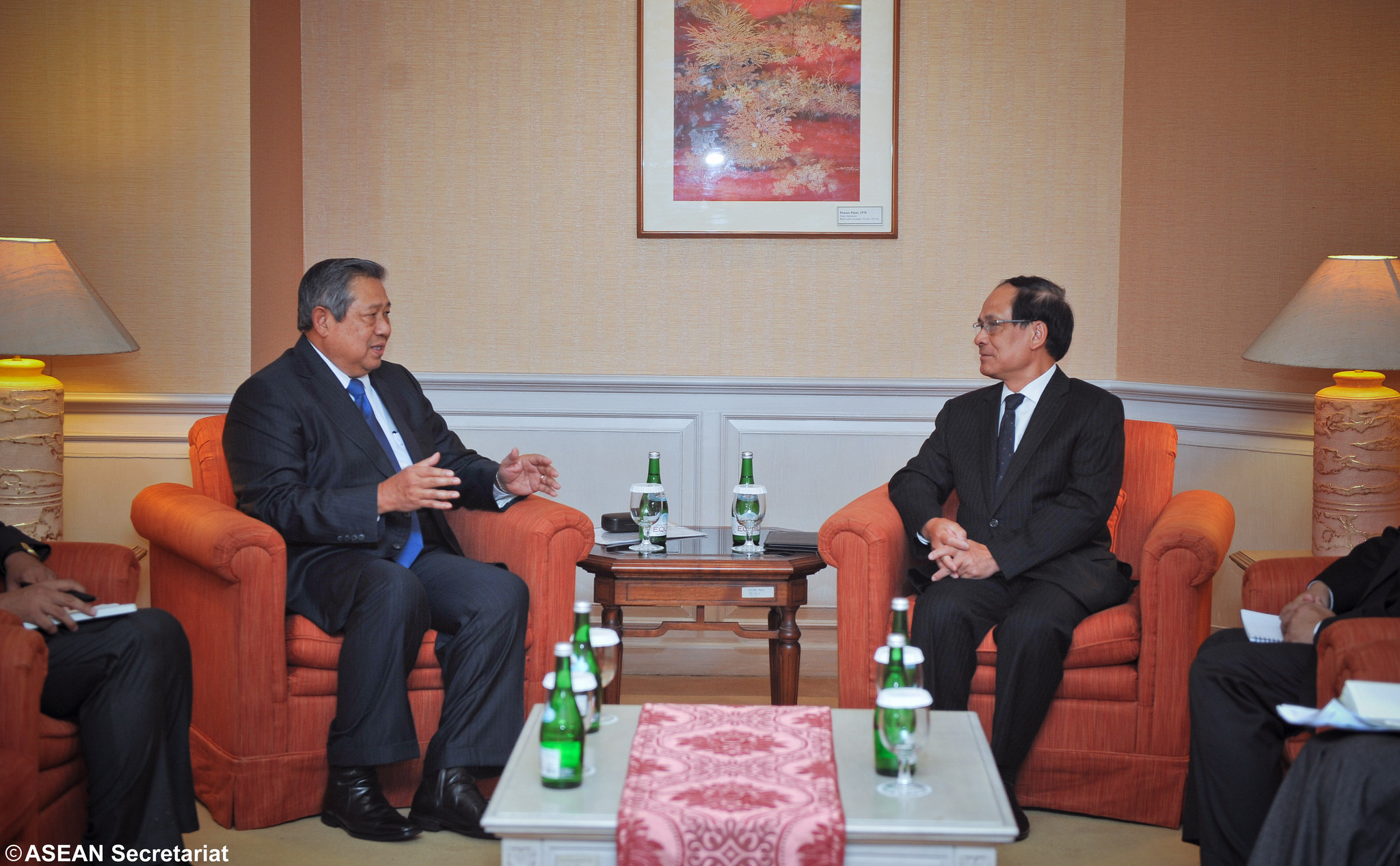
JAKARTA, 12 April 2016 – Secretary-General of ASEAN, H.E. Le Luong Minh, welcomed the President of Global Green Growth Institute (GGGI) and former President of the Republic of Indonesia, H.E. Dr. Susilo Bambang Yudhoyono, yesterday at the ASEAN Secretariat to discuss potential collaboration on green growth.  Currently, five ASEAN Member States are members of GGGI: Cambodia, Indonesia, the Philippines, Thailand and Viet Nam.

 Dr. Yudhoyono highlighted the need to work collaboratively to ensure that green growth concept be adopted by all countries, especially by the emerging and developing economies. He updated on the progress of GGGI’s work and projects with governments, including a number of ASEAN Member States and international organisations. He reiterated the need to support countries in fulfilling their targets to curb the greenhouse gas emission, as pledged in their respective Intended Nationally Determined Contributions to the United Nations Framework Convention on Climate Change.  He proposed four core areas which could serve as cooperation with ASEAN, i.e. energy, green city development, land use and water conservation.

With Southeast Asia being one of the most vulnerable regions to climate change impacts, Secretary-General Minh emphasized that addressing climate change and promoting low carbon development is one of the priorities of ASEAN. He also shared on ASEAN’s efforts in addressing climate change, such as through promoting sustainable peatland management to reduce greenhouse gas emission from peatland fires, and implementing the ASEAN Agreement on Transboundary Haze Pollution. Secretary-General Minh also highlighted that ASEAN, while being rich in biodiversity but remained vulnerable to habitat and biodiversity loss due to climate change, places high importance on biodiversity conservation, as reflected in the establishment of a dedicated centre for biodiversity based in Los Banos, Philippines. He recognized that there are synergies and mutually-enforcing action-plans between ASEAN Vision 2025 and the United Nations Sustainable Development Goals.

Both sides agreed that there is a convergence of interests and opportunities for collaboration, and hoped to enhance broader and deeper cooperation. Dr. Yudhoyono also encouraged ASEAN to continue to be in the driving seat in addressing global issues, and that the collaboration between ASEAN and the GGGI can be a showcasefor other potential partners to follow suit.

Indonesia Deposits Instrument of Ratification of the ASEAN Agreement on Transboundary Haze Pollution

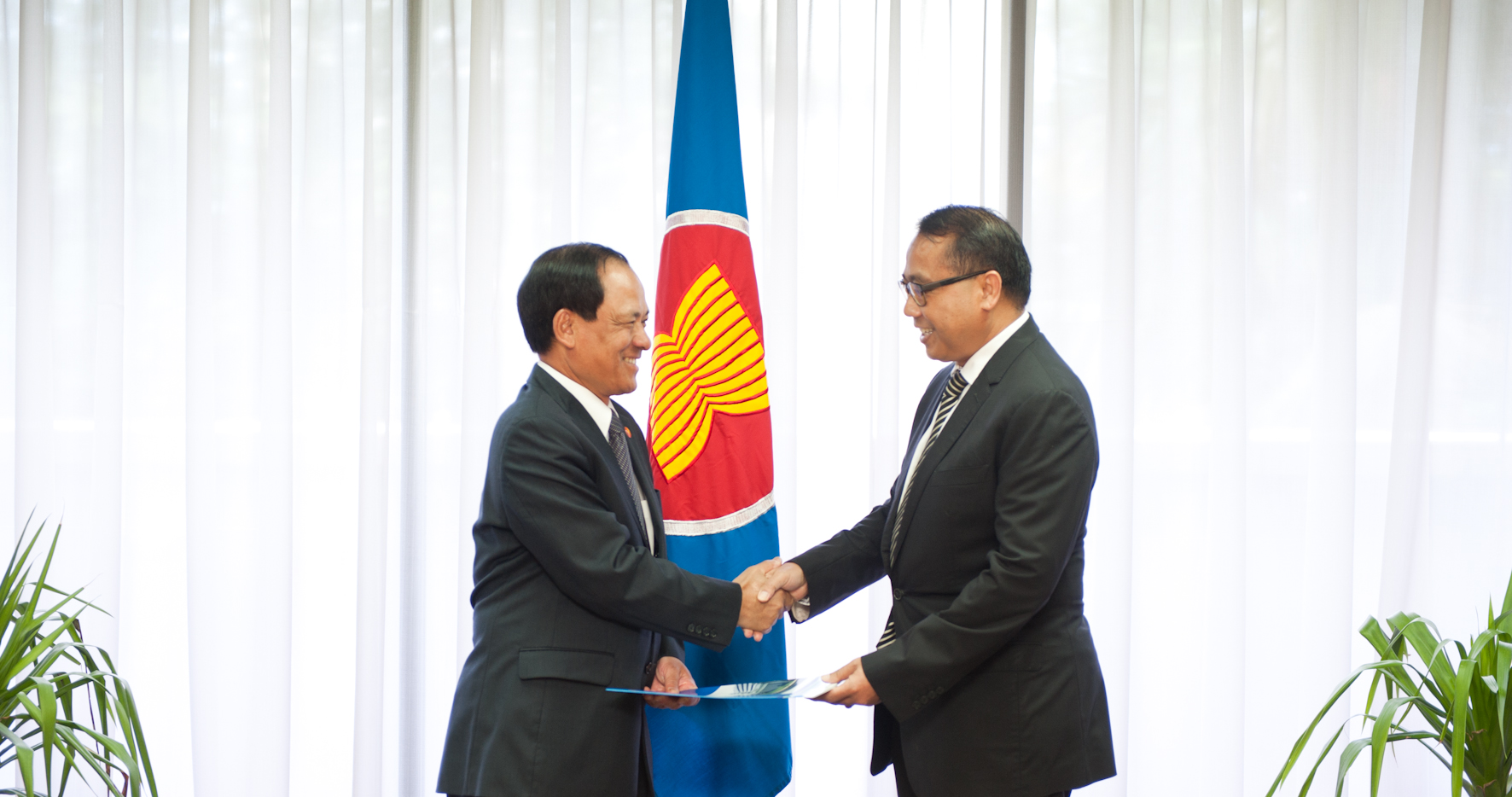
JAKARTA, 20 January 2015 – H.E. I Gusti Agung Wesaka Puja, the Director General for ASEAN Cooperation, Ministry of Foreign Affairs of Indonesia, today deposited Indonesia’s Instrument of Ratification of the ASEAN Agreement on Transboundary Haze Pollution with H.E. Le Luong Minh, Secretary-General of ASEAN.

Ambassador Puja conveyed his Government’s appreciation to the ASEAN Secretariat and the other ASEAN Member States (AMS) for the support and encouragement extended to Indonesia in concluding the ratification process. He informed SG Minh that the ratification of the Agreement was approved by Indonesia’s Parliament through Law No. 26 Year 2014.

SG Minh congratulated Indonesia for the ratification and commended the country for its efforts and commitment to working collectively with other AMS to address the transboundary haze pollution issues under the framework of the ASEAN Agreement on Transboundary Haze Pollution.

The Governments of the ten ASEAN Member Countries signed the ASEAN Agreement on Transboundary Haze Pollution (AATHP) on 10 June 2002 in Kuala Lumpur, Malaysia, and it entered into force on 25 November 2003. The Agreement is the first regional arrangement in the world that binds a group of contiguous states to tackle transboundary haze pollution resulting from land and forest fires. It has also been considered as a global role model for the tackling of transboundary issues. With Indonesia’s ratification, the Agreement has now been ratified by all ASEAN Member States.

Indonesia Presents its REDD+ Forest Governance Progress

During an international forest governance session last month in Republic of the Congo, Indonesia highlighted its work with the UN-REDD Programme in tackling governance challenges through participatory governance assessments for REDD+.  

The joint forest governance session on 23 October in Brazzaville, Republic of the Congo was organized by the Forest Carbon Partnership Facility (FCPF), the European Forestry Institute, Profor and the UN-REDD Programme to raise the profile of governance in REDD+ discussions. Mr. Mas Achmad Santosa, Head of the working Group for Legal Review and Law Enforcement in the Indonesian REDD+ Task Force and Deputy of the President’s Delivery Unit (UKP4) gave a presentation on Indonesia’s REDD+ governance challenges while also providing an update of what has been done to date to mitigate some of these risks.

During his intervention, Mr. Santosa announced that Indonesia’s UKP4 Unit and the Ministry of Forestry are now ready to use the Participatory Governance Assessment (PGA) data that the country has prepared for since May 2011, and collected since August of this year.  

The UN-REDD Programme currently has four PGA pilots, and Indonesia is by far the most advanced.  Through extensive stakeholder contributions and input from stakeholders at the national level as well as eight provincial working groups (in Aceh, Riau, Jambi, South Sumatra, West Kalimantan, Central Kalimantan, East Kalimantan, Central Sulawesi, Papua and West Papua), the PGA process has resulted in stakeholders agreeing on priority governance issues. As such, the PGA is a joint effort to tackle priority governance issues in Indonesia, such as mitigating corruption risks and ensuring Indigenous Peoples’ participation and rights in the REDD+ process.

Mr. Santosa explained to the participants of the joint session that the PGA in Indonesia has now gathered data based on joint decisions on what areas to collect governance data, which indicators to use and which methods to apply for data collection and validation. The data provides: baseline information on the quality of governance and preparedness for REDD+ implementation; a REDD+ governance safeguard road map; and policy recommendations outlining options to strengthen REDD+ governance structures and practices in the provinces. This data has been so well received that the REDD+ Task Force has recently agreed to use the final results of the participatory governance assessment project to inform policy decision making processes on REDD+ governance safeguards.

During an interview with the UN-REDD Programme after the joint session, Mr. Santosa re-emphasized the commitments from the REDD+ Task Force and Ministry of Forestry to include the PGA results in the national REDD+ process in Indonesia, and that the PGA currently is incorporated in the REDD+ Task Force system.  Further, he said a key role for the government will be to accelerate this governance process, stressing anti-corruption measures and the participation of stakeholders and freedom of information law.

The sustainability of the PGA is the next step of the Government of Indonesia in this process, and Mr. Santosa recognized the need to further integrate the PGA into government plans and programs. The ownership of all stakeholders in this process was highlighted, particularly that of civil society, which is playing a very significant role in the PGA process. Mr. Santosa also stated that governance safeguards will be an important area of work of the new REDD+ agency in Indonesia once it’s established, recognizing that the PGA results should also be owned and used by the Ministry of Forestry, as well as other relevant ministries. When asked what he learned from the PGA process in Indonesia, Mr. Santosa said he was grateful for this experienced and was reminded through the session that safeguards are a priority for implementing REDD+. He said he was also struck by the importance the participants placed on benefit sharing arrangements.

After this governance session in Brazzaville, Mr. Santosa returned to Jakarta to participate in a national PGA consultation, where stakeholders from the national level and 30 locations throughout the eight PGA provinces gathered to validate the PGA baseline data before a more formal launch in December of this year. 
EU Provides RM7.2 Million Grant for ASEAN Peatland Management Project

The European Union (EU) has allocated a grant of Euro 1.8 million (equivalent to RM7.2 million) to support the Sustainable Management of Peatland Forests in South East Asia (SEApeat) project, spanning a four-year duration. Vincent Piket, the EU Ambassador to Malaysia, announced this development in Kuala Selangor. The project’s implementation will be overseen by the Global Environment Centre (GEC), a Malaysian non-governmental organization (NGO) specializing in environmental matters.

While the project’s core management team is based in Malaysia, SEApeat boasts an extensive regional scope, encompassing other ASEAN member states with peatland forests, including Brunei, Cambodia, Indonesia, Laos, Myanmar, the Philippines, Vietnam, and Thailand. During the launch of the project, Ambassador Piket introduced its inaugural activity, known as “The Regional Training and Trainers Programme on Peatland Assessment and Management,” which brought together representatives from various ASEAN countries.

This initiative represents a significant step towards promoting the sustainable management of peatland forests in the region, thanks to the EU’s substantial financial support and collaborative efforts with the GEC and ASEAN nations.

ASEAN Secretariat and IFAD Ink Deal to Promote Sustainable Development of Peatlands and Address Transboundary Smoke Haze Pollution

A Project Grant Agreement to implement the “Rehabilitation and Sustainable Use of Peatland Forests in Southeast Asia” project was recently signed by the ASEAN Secretariat and the International Fund for Agricultural Development (IFAD). The Agreement was signed by Dr Surin Pitsuwan, Secretary-General of ASEAN and Mr Lennart Båge, President of IFAD.

The four-year project received a grant of US$4.3 million from the Global Environment Facility (GEF) and will mobilise an additional US$10.2 million in co-financing during the implementation phase. IFAD has been designated as the implementing agency for GEF while the ASEAN Secretariat will coordinate the execution of the project in ASEAN Member States.

Dr Surin expressed his appreciation to GEF and IFAD for their support to this project. He noted that “the project will help to address the major transboundary environmental problem – smoke haze pollution – facing the ASEAN region.”

He added, “More importantly, this project will also contribute towards addressing the global climate change crisis. More and more international partners have recognised the value and mutual benefits of working with ASEAN and the ASEAN Secretariat and capitalising on its robust intergovernmental framework for programme design, implementation and monitoring. This GEF/IFAD project is another demonstration of this confidence in ASEAN.”

ASEAN has more than 30 million hectares of peatlands comprising 60% of global tropical peatland resource. Peatlands are primarily water-logged areas containing centuries-old decayed vegetative matter up to several metres deep. While being significantly important for development, livelihood, environment and biodiversity, unsustainable practices and adverse climate conditions have severely degraded the peatlands, making them the primary source of fires and smoke haze that affects the region regularly. Degraded peatlands are also a major source of greenhouse gases contributing to global warming. ASEAN, through the ASEAN Agreement on Transboundary Haze Pollution adopted in 2002, is undertaking a concerted effort to address forest and land fires in fire prone areas such as the peatlands.

This project takes a holistic approach to promote sustainable management of peatlands, sustain local livelihoods, reduce risk of fire and associated smoke haze, and contribute to global environmental efforts particularly biodiversity conservation and climate change mitigation. It consists of both national activities undertaken in participating countries with major peatland areas, namely Indonesia, Malaysia, the Philippines and Viet Nam and regional activities involving all ASEAN States to share best practices, technology and experience. On-the-ground activities will be undertaken at several identified peatland areas together with the local governments, private sector and local community.