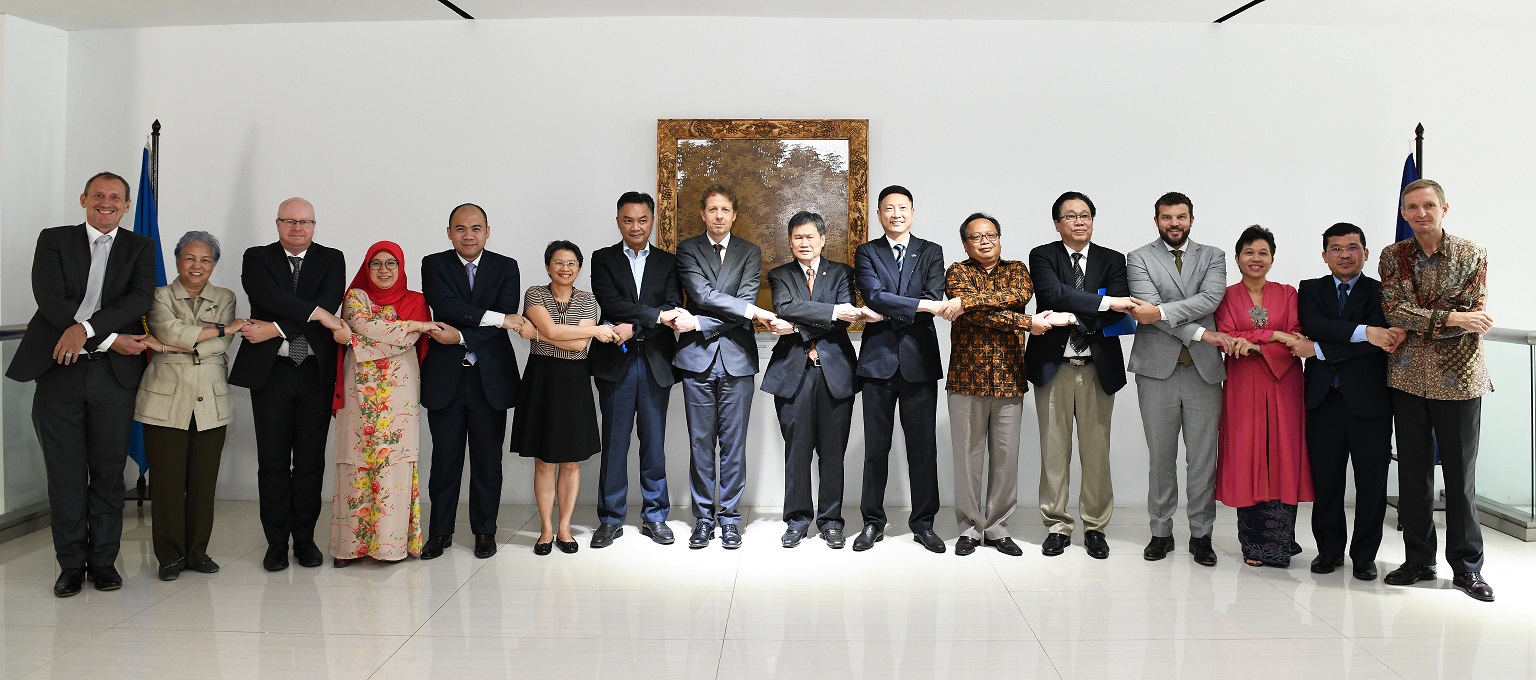
JAKARTA, 15 November 2019 – To support ASEAN’s endeavours in combating transboundary haze pollution and peatland fires, the European Union (EU) launched the civil society component of the EUR 24 million programme to support Sustainable Use of Peatland and Haze Mitigation in ASEAN (SUPA). The overall programme is funded with EUR 20 million contributions from the EU and EUR 4 million from the German Government.
This new initiative supports the objectives of the ASEAN Peatland Management Strategy through collective actions and enhanced cooperation that improves sustainable peatland management, mitigates the impacts of climate change, manages the risk of wild fires and reduces trans-boundary regional haze. The initiative also supports and sustains local livelihoods while contributing to global environmental management.
The programme is also critical in tackling the root causes of peatland fires in mitigating the impacts of climate change, especially in the wake of recent peatland and forest fires in the region in 2019, with a total of 857,755 hectares burned, an increase from the 529,266 hectares that burned in 2018 and on top of the 2.6 million hectares burned in 2015[1].
The EU’s support to ASEAN’s sustainable peatland management is composed of two mutually reinforcing main components, namely governmental approach and non-state actor approach. The governmental approach is implemented by Deutsche Gesellschaft für Internationale Zusammenarbeit (GIZ) while the non-state actor approach is implemented by World Resources Institute Indonesia in collaboration with Tropical Rainforest Conservation & Research Centre Malaysia and the IDH Sustainable Trade Initiative. The two components will work collaboratively to support ASEAN in addressing the root causes of forest fires.
The EU Ambassador to ASEAN Igor Driesmans hopes that this new programme will encourage the ASEAN region to become more resilient and proactive in sustainable peatland management. Although much has been achieved since 2015, to fully realise the ASEAN Transboundary Haze Agreement, efforts to mitigate peatland fires and curb the adverse impacts of climate change requires sustained attention.
The Secretary-General of ASEAN Dato Lim Jock Hoi highlighted that the spirit of ASEAN cooperation in addressing regional and transboundary issues remains strong and it is augmented through this year’s ASEAN Chairmanship theme: ‘Advancing Partnership for Sustainability’. ASEAN cooperation and its mechanisms will continue to complement and add-value to the ASEAN Member States’ priorities in many fronts, while simultaneously contributing to the implementation of the UN SDGs.
Further, Dato Lim mentioned that together with the ASEAN-EU High-Level Dialogue on Environment and Climate Change held earlier this month in Bangkok, and the project on Biodiversity Conservation and Management of Protected Areas in ASEAN, SUPA programme is another opportunity provided by the ASEAN-EU cooperation framework which will act as foundation of knowledge to help ASEAN Member States and relevant institutions in achieving enhanced capacity and regional coordination in sustainable management of forest and peatlands.
Ambassador Driesmans also pointed out that the SUPA Programme marks a significant milestone for the EU and ASEAN, as this is the first regional cooperation under the EU-ASEAN Multi-annual Indicative Programme in the area of climate change. This showcases that both regions are committed to tackle the root causes of peatland fires and mitigate the adverse impacts of climate change. In addition, he highlighted that the programme contributes to the EU’s commitment to address global environmental issues, in particular to support mitigation of carbon emissions from carbon-rich peatland areas, as well as conservation of the unique biodiversity of peatland ecosystems.
[1] http://sipongi.menlhk.go.id/pdf/luas_kebakaran