SUPA/ASEAN REPEAT Concludes its Five Years of Implementation in ASEAN

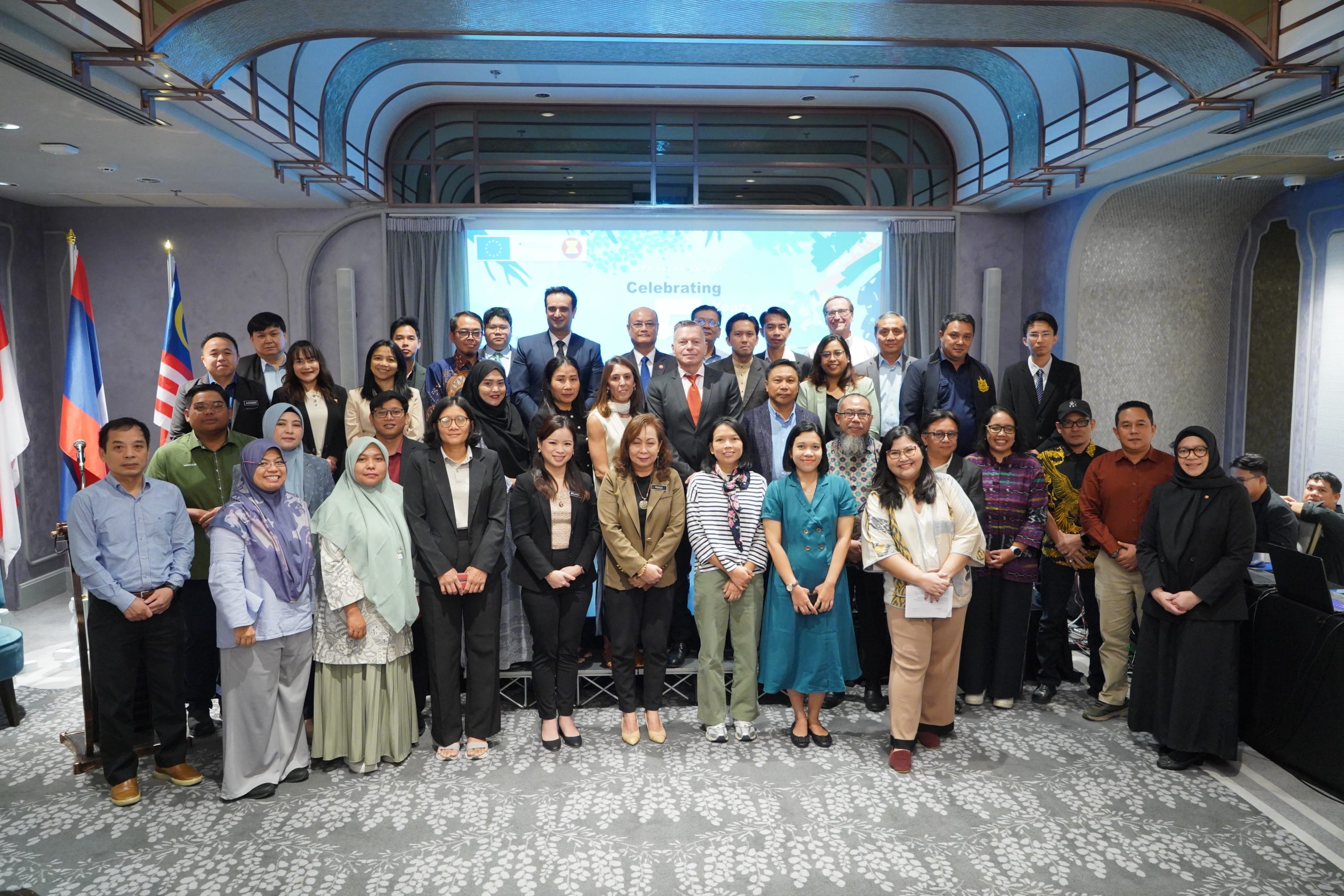
BANGKOK, 7 November 2024 – Sustainable Use of Peatlands and Haze Mitigation in ASEAN/Strengthening Regional Experiences on Sustainable Peatland Management in ASEAN (SUPA/ASEAN REPEAT) organised its closing meeting on 6-7 November 2024 in Bangkok, Thailand. The meeting showcased the achievements and success that the project has done in the span of five years of implementation in the region.

A Legacy of Collaboration and Achievements

As the curtain fell on the SUPA/ASEAN REPEAT project, it became clear that the initiative had made lasting strides in addressing one of the region’s most pressing environmental challenges—peatland degradation. Over the past five years, the project has not only contributed to the implementation of the ASEAN Peatland Management Strategy (APMS) but also laid the groundwork for more resilient and sustainable livelihoods across ASEAN Member States (AMS).

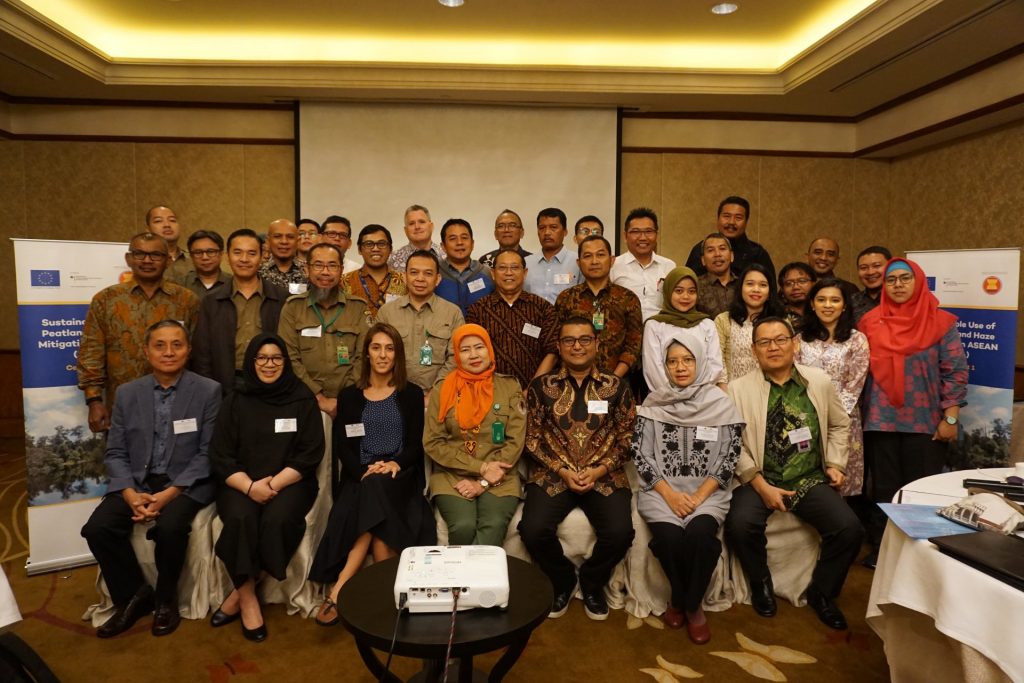
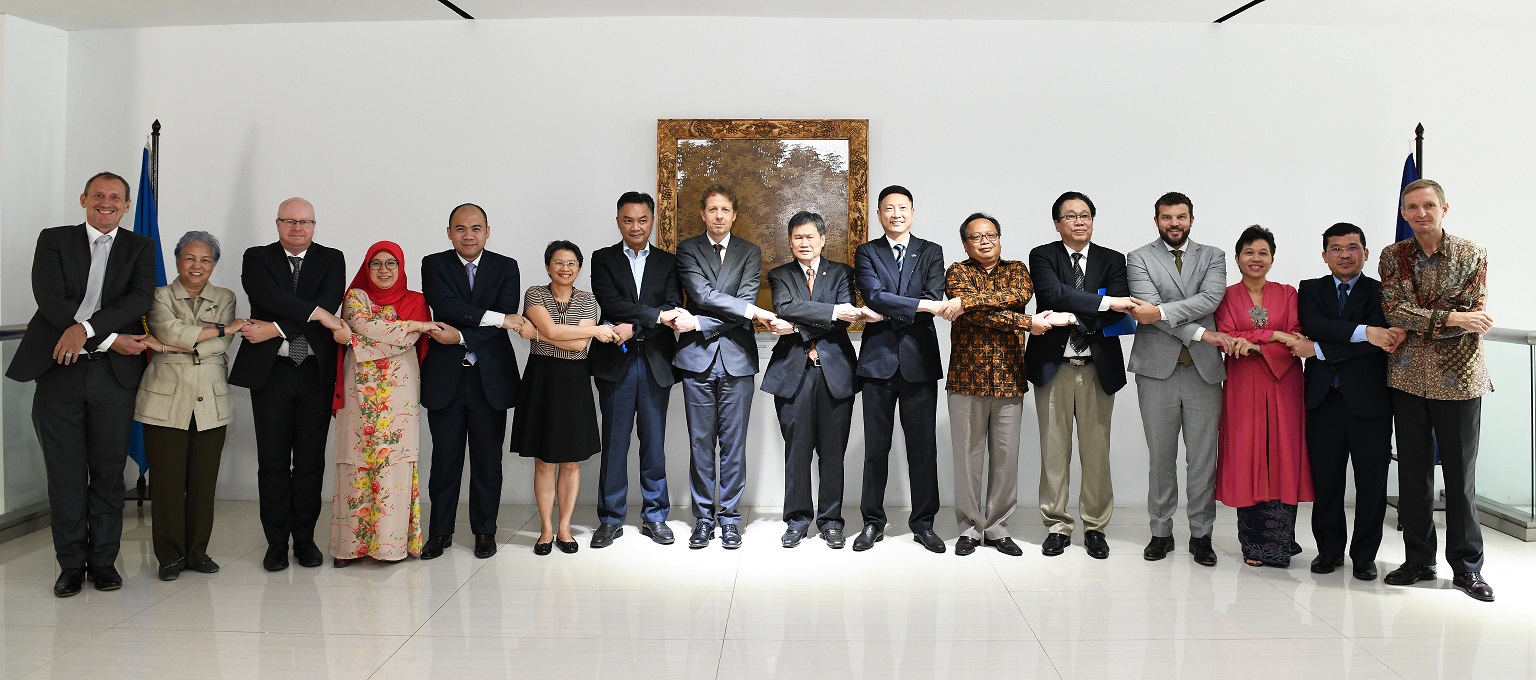
The closing event kicked off with an enlightening presentation by Remote Sensing Solutions GmbH, who revealed an updated peatland map for Southeast Asia—an invaluable tool in monitoring and managing these vital ecosystems. However, it was the second day of the meeting that truly encapsulated the emotional weight of the project’s achievements as ASEAN Member States (AMS), the ASEAN Secretariat, and SUPA/ASEAN REPEAT team gathered for one last time under the SUPA/ASEAN REPEAT event. Representatives from German Embassy in Bangkok and EU Delegation to ASEAN were also present.

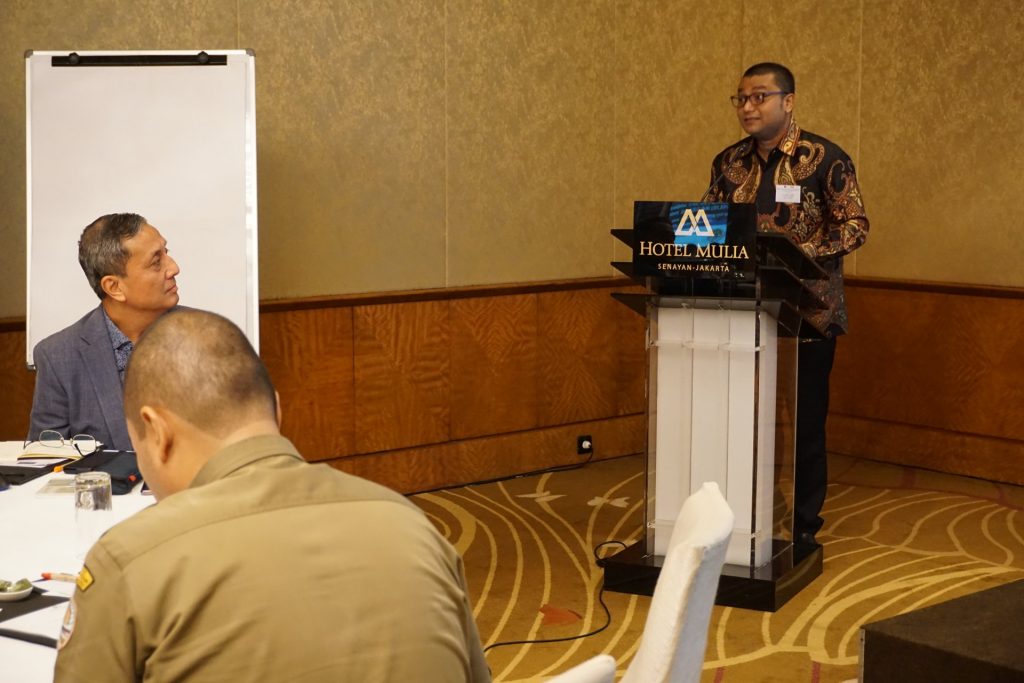
Dr. Vong Sok, Head of the Environment Division of the ASEAN Secretariat, delivered a heartfelt message highlighting the significant contribution of the SUPA/ASEAN REPEAT in championing the implementation of the APMS, which include the support for the development of the Second APMS (2023-2030). “On behalf of the ASEAN Secretasriat and ASEAN Member States, we would like to convey our appreciation to Germany and EU for the generous support and reiterate our commitment to continue our efforts for integrated peatland management, engage with stakeholders and the community, for resilient and sustainable livelihoods.”

Reflecting on the Journey: From Concept to Impact

In a poignant online address, Mr. Muamar Vebry, Programme Manager for Climate Change and Disaster Management at the EU Delegation to Indonesia and ASEAN, took attendees on a journey back to the early days of the project. He noted that the SUPA initiative had been a “pioneering endeavour in sustainable peatland management across ASEAN.” He also highlighted the project’s achievements “We have tirelessly supported the implementation of ASEAN Peatland Management Strategy (APMS) and strengthened the capacity of AMS with over 30 capacity building activities and more than 1,000 individuals trained,” he said.

Indeed, the project’s holistic approach—spanning regional, national, and local levels—was a defining feature of its success. Throughout the meeting, the event’s design allowed for a deep dive into the various interventions and collaborations that had shaped the project.

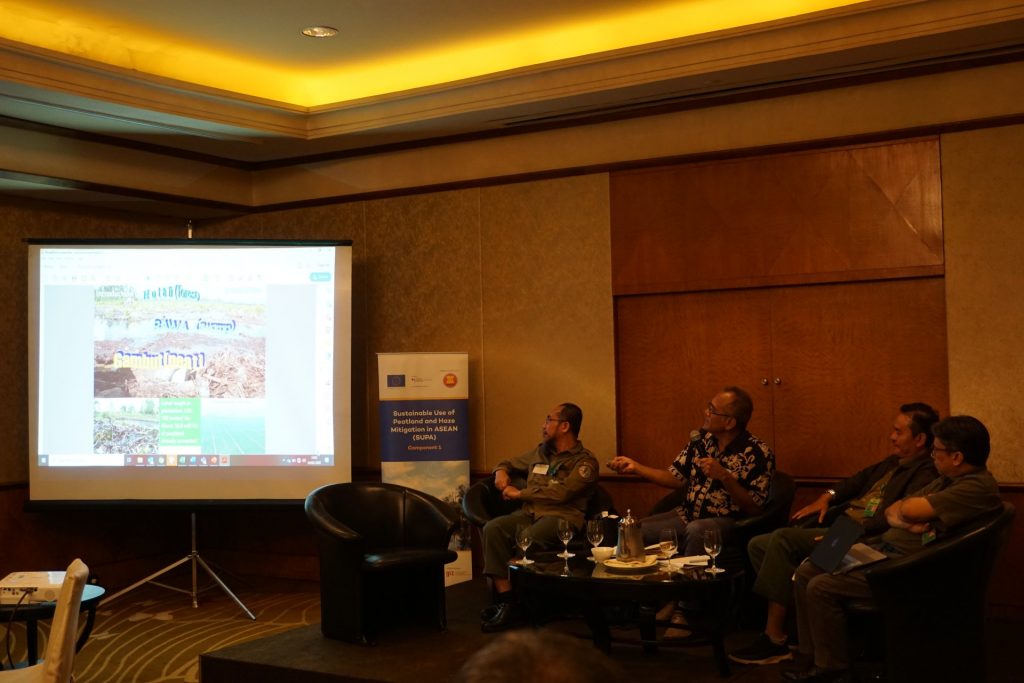
A highlight of the event was the engaging panel discussion on strengthening regional cooperation and capacity building, which featured key experts: Mr. Muhammad Askary from Ministry of Environment and Forestry of Republic Indonesia, Ms. Nadzmin Ahmad Nazir from Ministry of Natural Resources and Environmental Sustainability Malaysia, Dr. Israr Albar from Ministry of Environment and Forestry of Republic Indonesia, and Ms. Mardiah Hayati from ASEAN Secretariat. The discussion underscored the importance of continued collaboration between ASEAN nations in order to enhance the region’s collective capacity to manage peatlands effectively.

From National Strategies to Local Action: Making a Difference on the Ground

The impact of the project was felt not only at the regional level but also through its tailored support at the national level. During the meeting, representatives from several ASEAN Member States presented their experiences with implementing the APMS and National Action Plans for Peatlands (NAPPs) through grant funding from the project. These presentations offered a candid look at both the successes and the challenges encountered along the way—and provided valuable insights for future efforts.

The local impact was equally significant. Representatives from the SUPA pilot sites in Pahang, Malaysia, and Aceh, Indonesia, shared their firsthand experiences, detailing how the project had helped build local capacity and foster community-driven solutions to peatland management. These grassroots efforts, coupled with national and regional strategies, have provided a blueprint for sustainable peatland management in the ASEAN region.

Looking Ahead: Building on a Strong Foundation

While the SUPA/ASEAN REPEAT project may have come to a close, the momentum it has generated is far from over. As Mr. Hans-Ulrich Südbeck, Head of the Economic Department at the German Embassy in Bangkok, noted during his opening remarks, “Looking into the future of the collaboration of German-ASEAN, we will put a strong focus on the new project which is Southeast Asia Clean Air Initiative. This is aiming at ensuring a smooth transition of efforts from SUPA to broader climate action in the region.”

In accordance with Mr. Südbeck’s comments, GIZ also introduced new projects “Sustainable Land Use & Climate Action Policy in ASEAN (CAP)” and “Integrated Approaches for Air Quality Management & Climate Change in Southeast Asia or Southeast Asia Clean Air Initiative (SEACAI)” which would continue the legacy of SUPA/ASEAN REPEAT in mitigating the climate change and air pollution in Southeast Asia.

Ms. Barbara Goncalves from SUPA/ASEAN REPEAT shared the lessons learned from the programme, and Mr. Shameer Khanal, GIZ Cooperation Area Lead ASEAN wrapped up the event.

A Farewell, But Not Goodbye

As the project’s formal activities had concluded, its impact would continue to resonate across the ASEAN region. The contributions of the donors, partners, and stakeholders were acknowledged, with a shared sense of gratitude for the collective efforts that had made SUPA/ASEAN REPEAT a success.

The achievements of SUPA/ASEAN REPEAT

Watch the achievement video: SUPA/ASEAN REPEAT: Celebrating Five Years of Implementation in ASEAN
SUPA Component 1 Organised Technical Workshop in Aceh

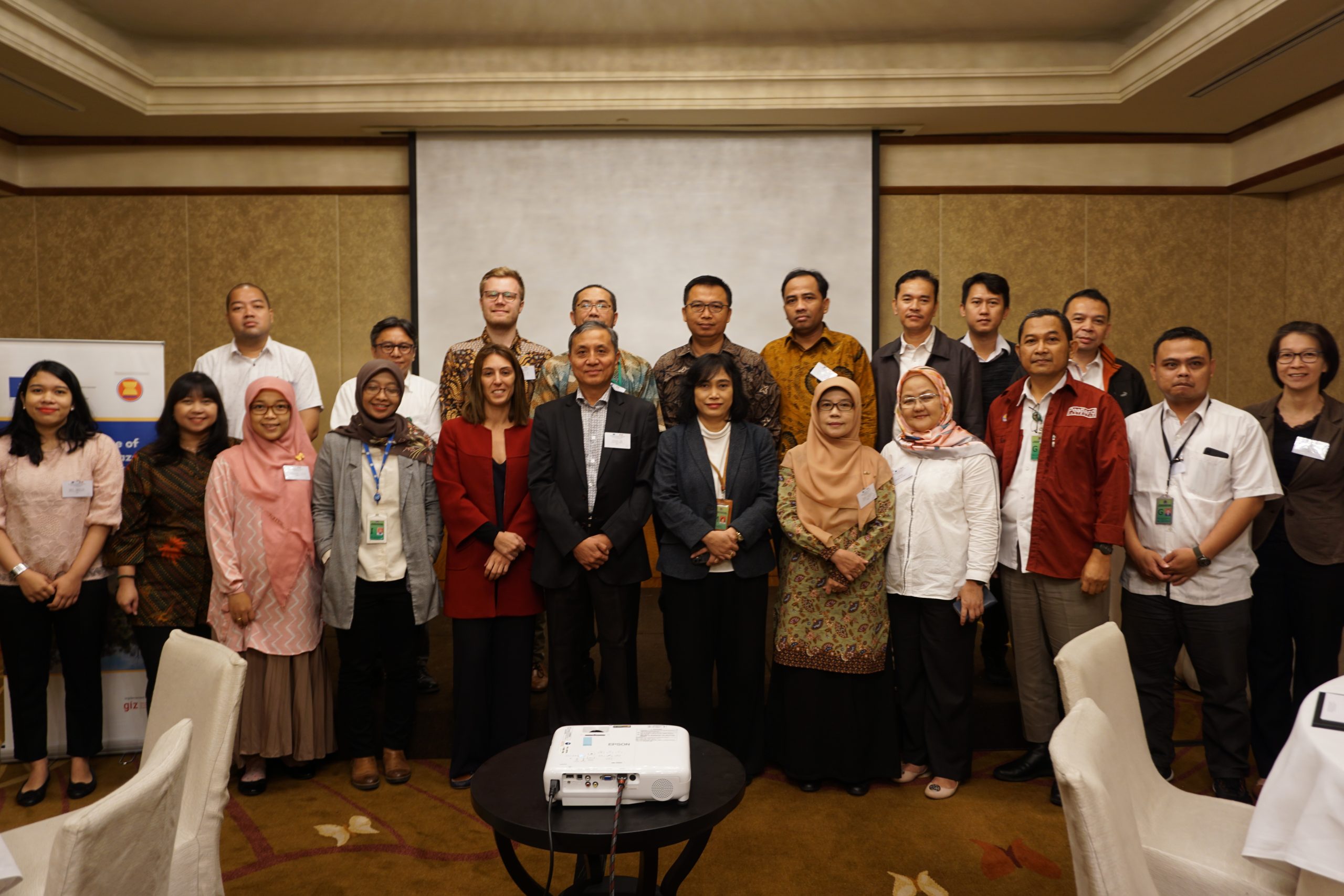
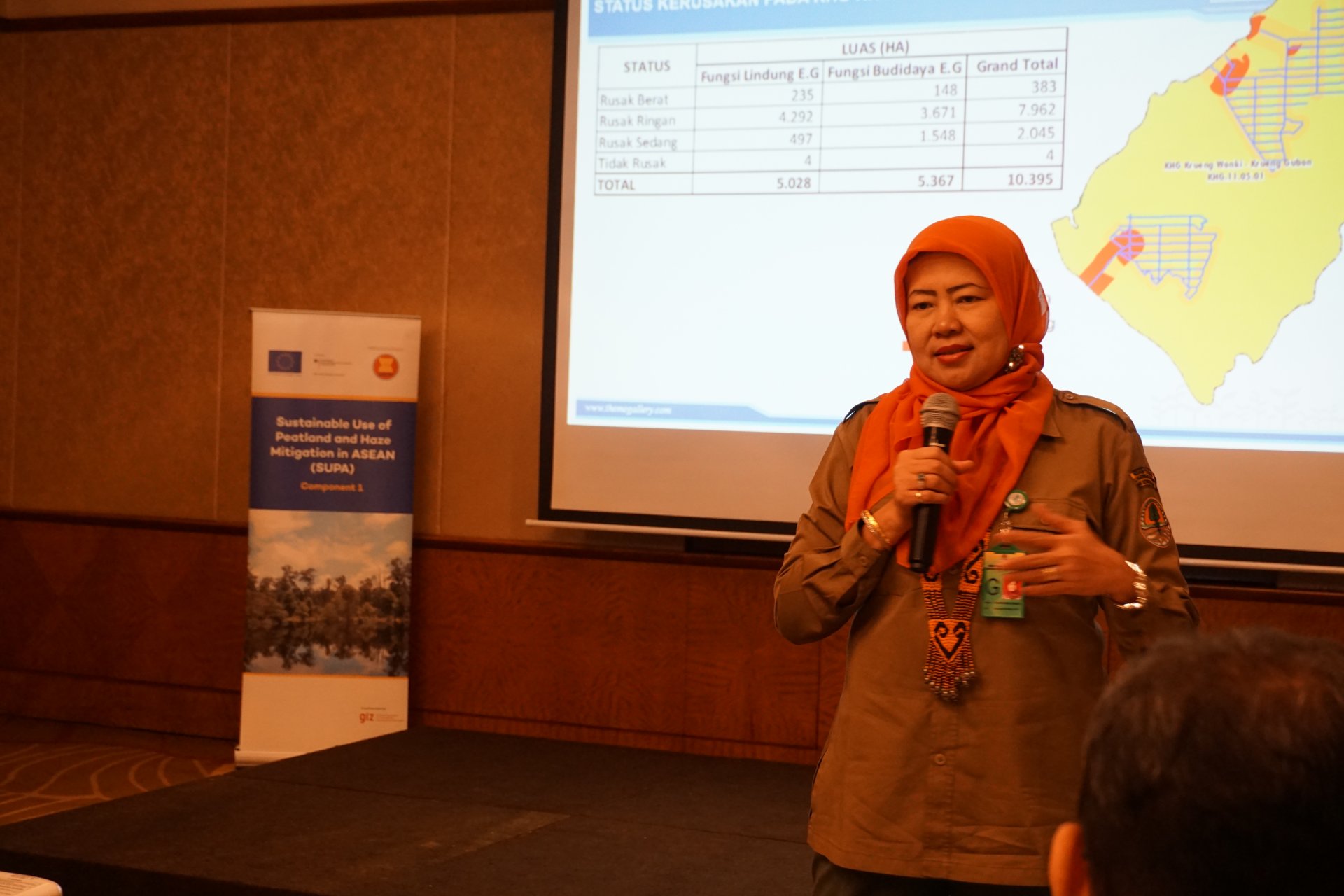
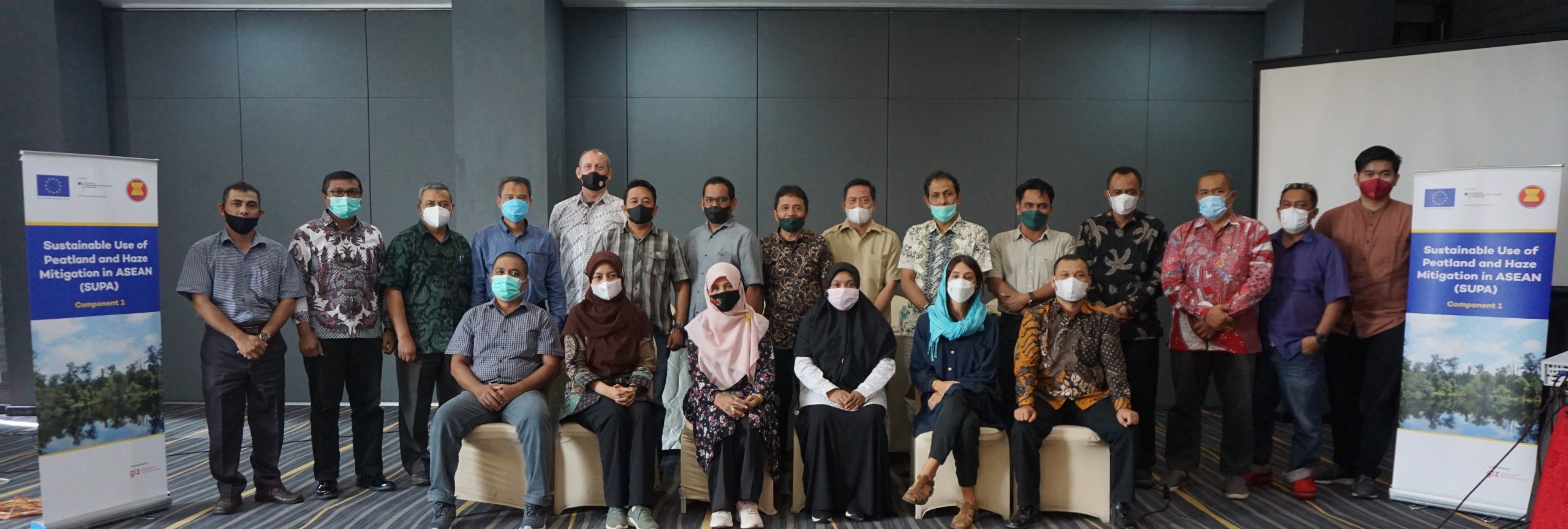
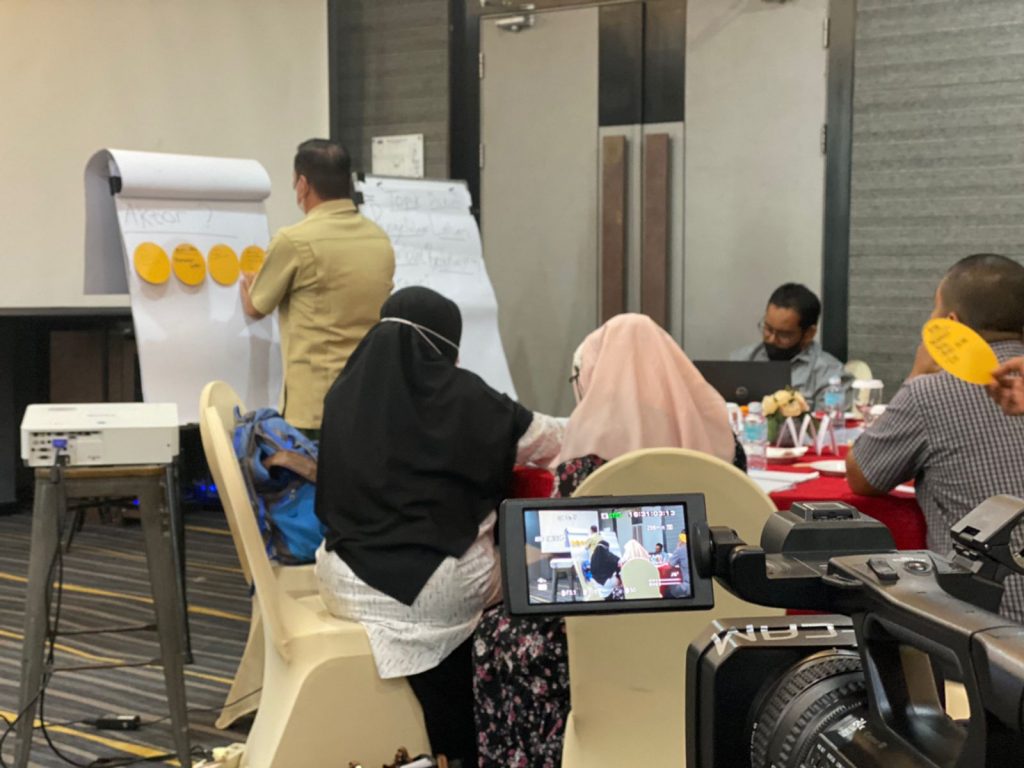
On 26-27 January 2022, Peatland Restoration Directorate of the Ministry of Environment and Forestry (DPKG-KLHK), Environment and Forestry Agency (DLHK) Aceh, and the Deutsche Gesellschaft für Internationale Zusammenarbeit GmbH (GIZ) organised a hybrid meeting in Banda Aceh to present the results of baseline studies to the national, provincial and district partners. The presentations were also followed by Focus Group Discussions guided by peatland experts: Dr. Marinus K Harun, from BPSILHK Banjar Baru; and Dr. Yusya Abubakar, from Syiah Kuala University Aceh.

At the meeting, participants discussed on how to achieve sustainable peatland management while maximising livelihood opportunities for the ten priority peatland communities, taking into account the commodities currently exploited by the peat communities and the existing peatland site conditions. Two important aspects that need attention when planning for pilot site future interventions are fire and flooding events. The event was closed with a brief presentation by Sustainable Use of Peatland and Haze Mitigation in ASEAN (SUPA) Component 1 on the workplan for the next six months, based on the already agreed general workplan. 

SUPA Component 1, particularly under Work Area 3, aims to generate pilot experiences from Indonesia and Malaysia. The pilot projects aspire to demonstrate how a peatland, within the landscape or peatland hydrological unit, can be restored and/or rehabilitated through sustainable peatland management options. The best practices drawn from the pilot sites will be able to be adopted by others—not limited to Indonesia and Malaysia but to the entire ASEAN region.

As part of the implementation of Work Area 3, SUPA Component 1 will support technical guidance, monitor project’s progress, and technical recommendation on the activities. Last year, SUPA Component 1 carried out a series of baseline studies on the pilot site area in order to best plan for the interventions at the PHU site. The baseline studies included: land cover, land use change and burn scar mapping, socio-economic vulnerability assessment and an assessment of fire situation in the pilot site. 

On the way forward, SUPA Component 1 will hold a Pilot Site Steering Committee Meeting to discuss the workshop results and approval for the pilot site workplan. SUPA Component 1 will also organise workshops with the villages and do a comparative study to another place with experience on sustainable peatland management.

SUPA Component 1 and Environment and Forestry Office of Aceh Province Held the Launching of SUPA Pilot Site in Aceh, Indonesia

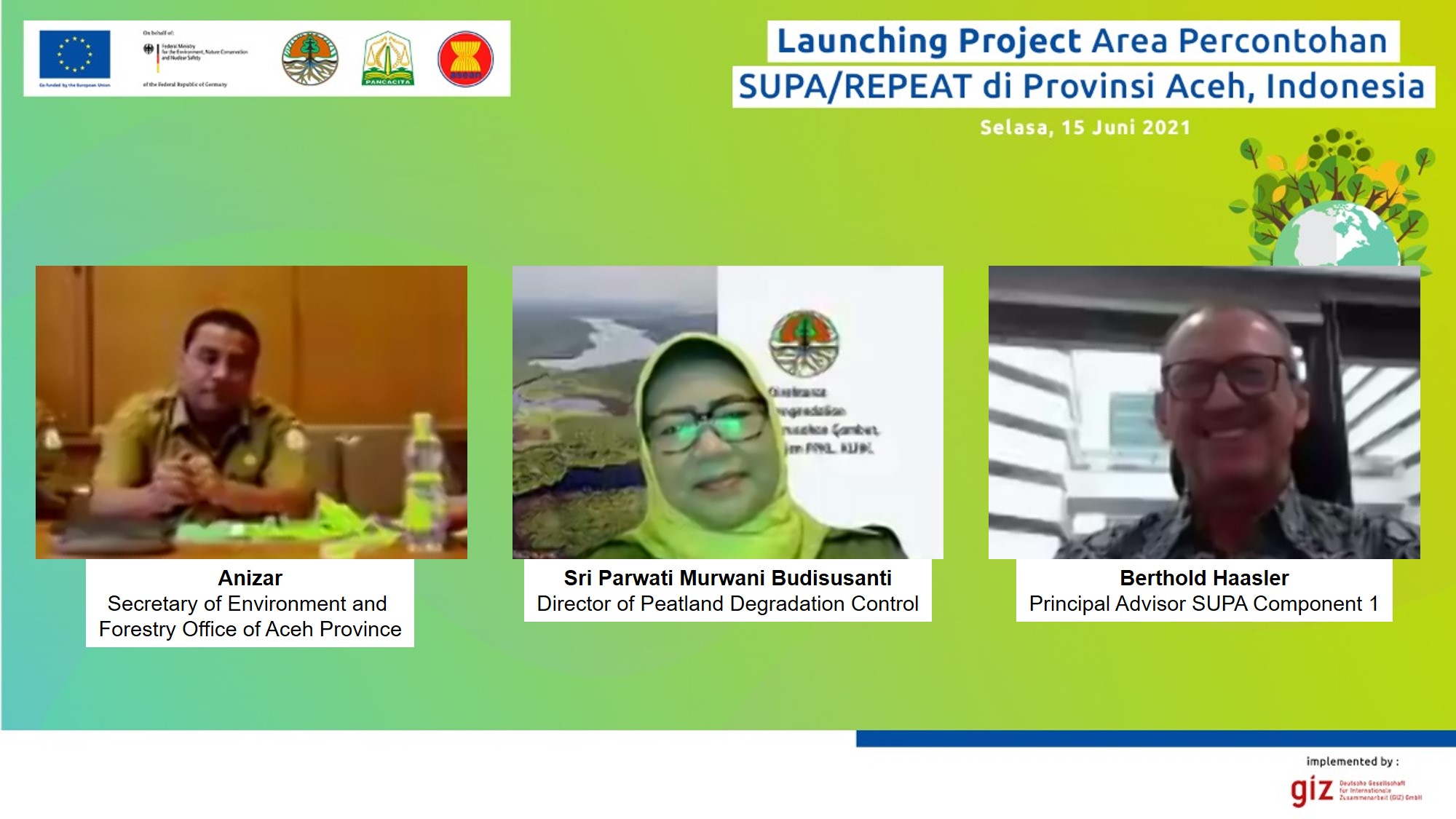
As a follow up to the signing of the agreed minutes for technical cooperation on Sustainable Use of Peatland and Haze Mitigation in ASEAN (SUPA) Component 1 on 25 May 2021, GIZ and Environment and Forestry Office of Aceh Province held the launching of SUPA Pilot Site in Aceh, Indonesia on 15 June 2021. This launching is the opening of a series of events related to SUPA Pilot Site in Aceh.

The virtual ceremony was attended by Sri Parwati Murwani Budisusanti, Director of Peatland Degradation Control; Anizar, MP, Secretary of Environment and Forestry Office of Aceh Province, and other relevant stakeholders. 

Reading the opening remarks of Head of Environment and Forestry Office of Aceh Province, Anizar shared some of the efforts that Aceh Province has done in peatland conservation. “Government of Aceh Province through the Environment and Forestry Office hopes that this SUPA programme will run smoothly and all the programme’s objectives can be achieved as planned.”

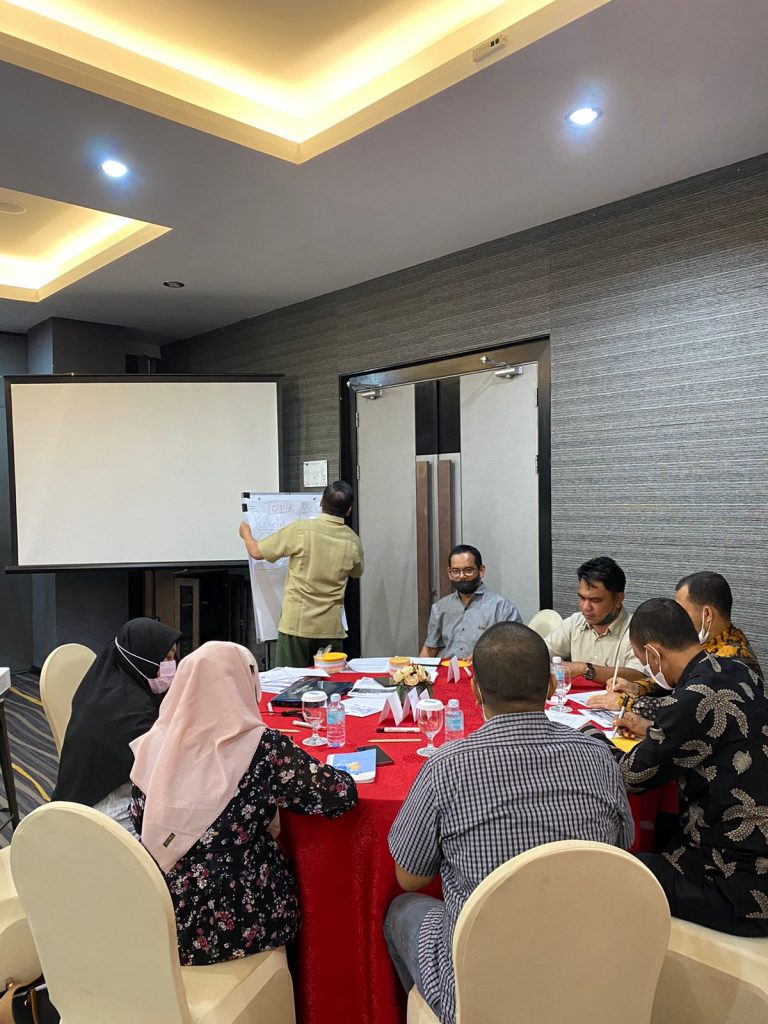
On 16-17 June 2021, a focus group discussion workshop was held to develop SUPA Pilot Site Work Plan. The workshop was attended by relevant stakeholders from Ministry of Environment and Forestry, Environment and Forestry Office of Aceh Province, NGOs, academics, and private sectors. The workshop generated valuable inputs and feedbacks from stakeholders that will be incorporated in the SUPA Pilot Site Work Plan.

The last meeting in this series of events is the preliminary meeting to prepare the 1st Project Steering Committee of SUPA Pilot Site in Aceh, Indonesia. With guidance from Ministry of Environment and Forestry and Environment and Forestry Office of Aceh Province, SUPA Component 1 will organize the 1st Project Steering Committee of SUPA Pilot Site in Aceh in due course.

SUPA Component 1 and Ministry of Environment and Forestry of The Republic of Indonesia Signed Agreed Minutes for Technical Cooperation in Aceh, Indonesia

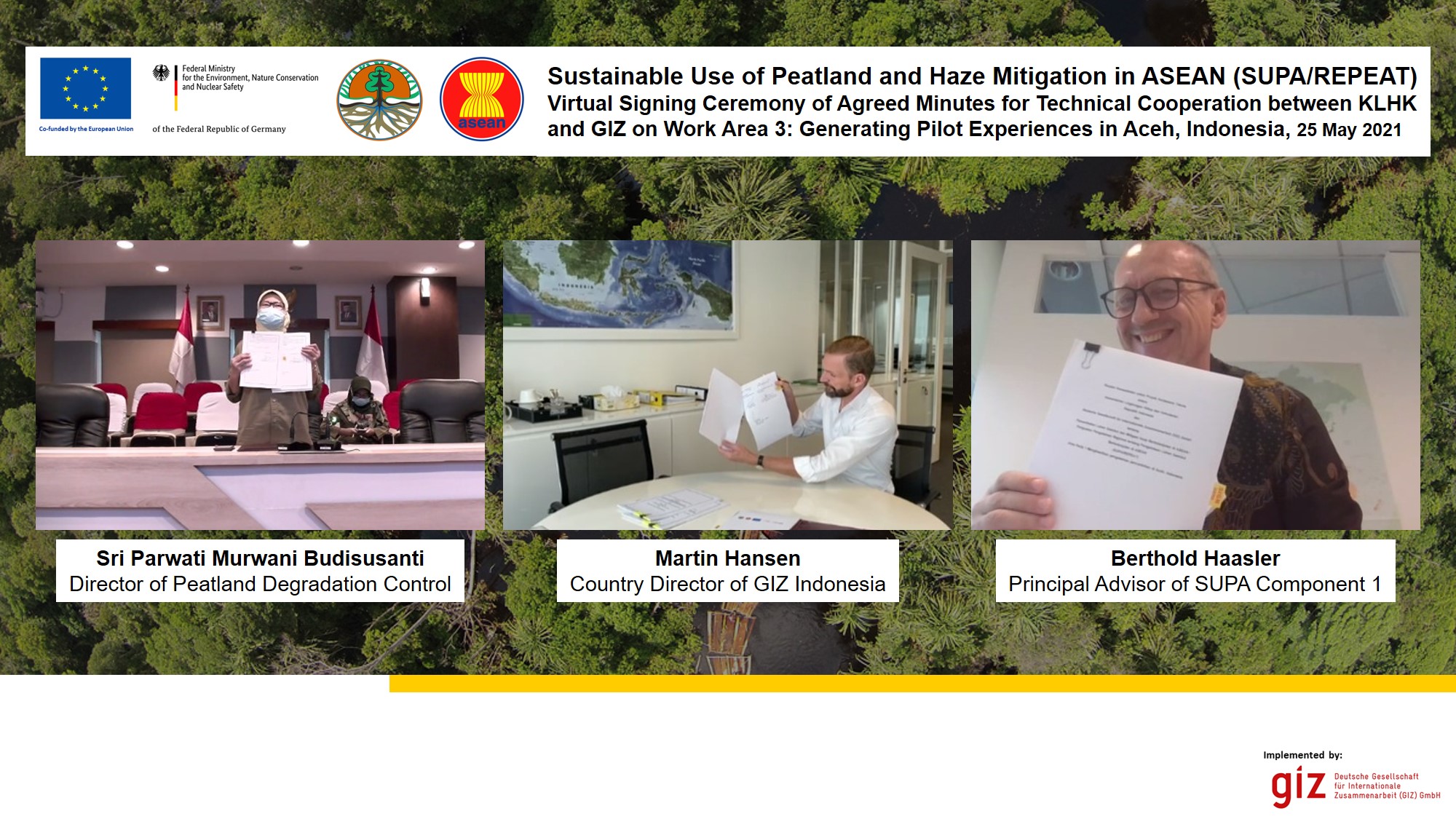
GIZ and Ministry of Environment and Forestry of The Republic of Indonesia (MoEF) signed the agreed minutes for technical cooperation on Sustainable Use of Peatland and Haze Mitigation in ASEAN (SUPA) Component 1 on 25 May 2021. The signed agreed minutes is specific for Work Area 3: Generating Pilot Experiences in Aceh, Indonesia.

The virtual ceremony was attended by Sri Parwati Murwani Budisusanti, Director of Peatland Degradation Control; Warthane Puvanarajah, First Secretary, Climate and Environment at the Embassy of the Federal Republic of Germany in Jakarta; A. Hanan, Head of Environment and Forestry Office of Aceh Province, and other relevant stakeholders. 

Reading the opening remarks of Director General of Pollution and Environmental Damage Control, SPM Budi Susanti said that the cooperation between Peatland Degradation Control Directorate and GIZ is warmly welcomed. “We hope that the cooperation in Aceh Barat and Nagan Raya district in Aceh province can realize the sustainable peatland ecosystem by implementing activities that support the targets and obligations of the Ministry of Environment and Forestry in the field of peat protection.”

“The results we achieve on the ground should primarily benefit the partners at the local level. But it is also important that we create good examples and best practices that can be adopted by others—not limited to Indonesia but to the entire ASEAN region,” said Berthold Haasler Principal Advisor of SUPA Component 1.

As a result of a thorough discussion and a list of criteria, the Indonesian government decided that the Aceh province with Nagan Raya and Aceh Barat districts should become the pilot area of SUPA Component 1 in Indonesia. This agreement will officially start the implementation of Work Area 3 in Indonesia.

Workshop on Concept Note Development for ASEAN Member States by SUPA Component 1

Sustainable Use of Peatland and Haze Mitigation in ASEAN (SUPA) Component 1 Work area 2 supports state actors in the ASEAN Member States (AMS) via funds in the implementation of the ASEAN Peatland Management Strategy (APMS) and National Action Plans on Peatland (NAPPs). The funds will be allocated to AMS, except Singapore and Brunei Darussalam, through a restricted call for proposals. Eligible state agencies are invited to present project proposals which will contribute to one or more of the four SUPA expected results, which are (1) ASEAN Programme on Sustainable Management of Peatland Ecosystems, APMS and NAPPs are gradually implemented at local, national and regional level through enhanced capacity and identification of ASEAN  peatland areas; (2) significantly reduced peatland fires and associated haze through fire prevention and peatland rehabilitation; (3) integrated management of targeted peatlands to maintain ecological functions and biodiversity and reduce GHG emissions; and (4) peatlands are sustainably managed to enhance livelihood and maintain economic value.

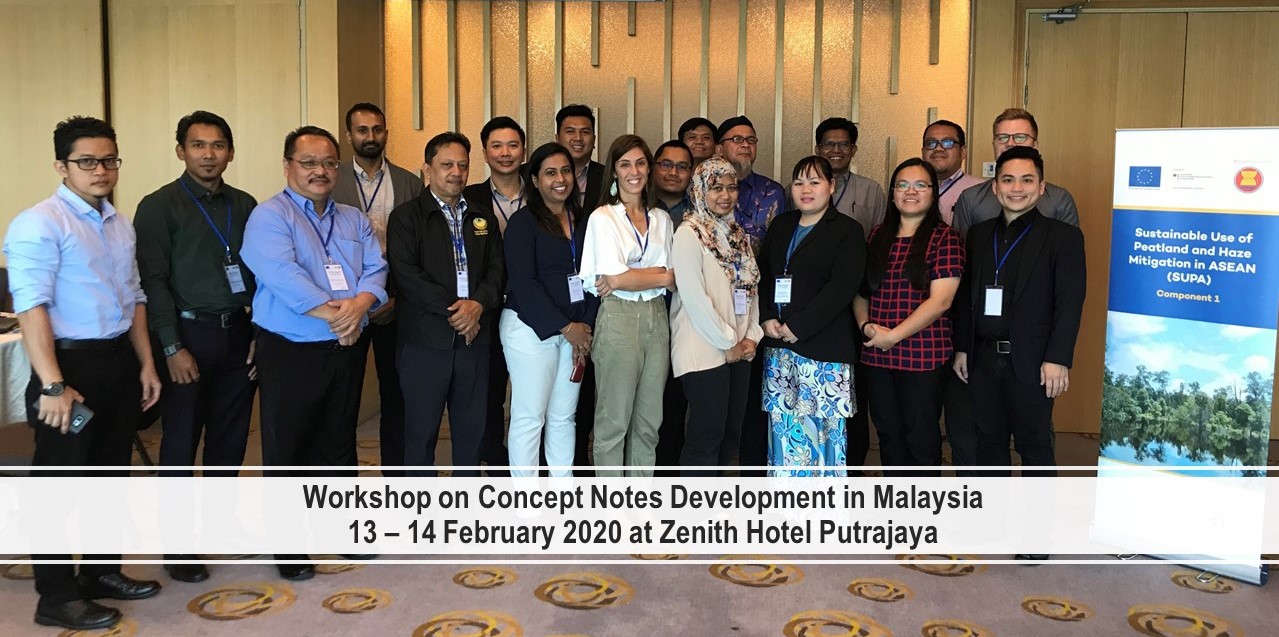
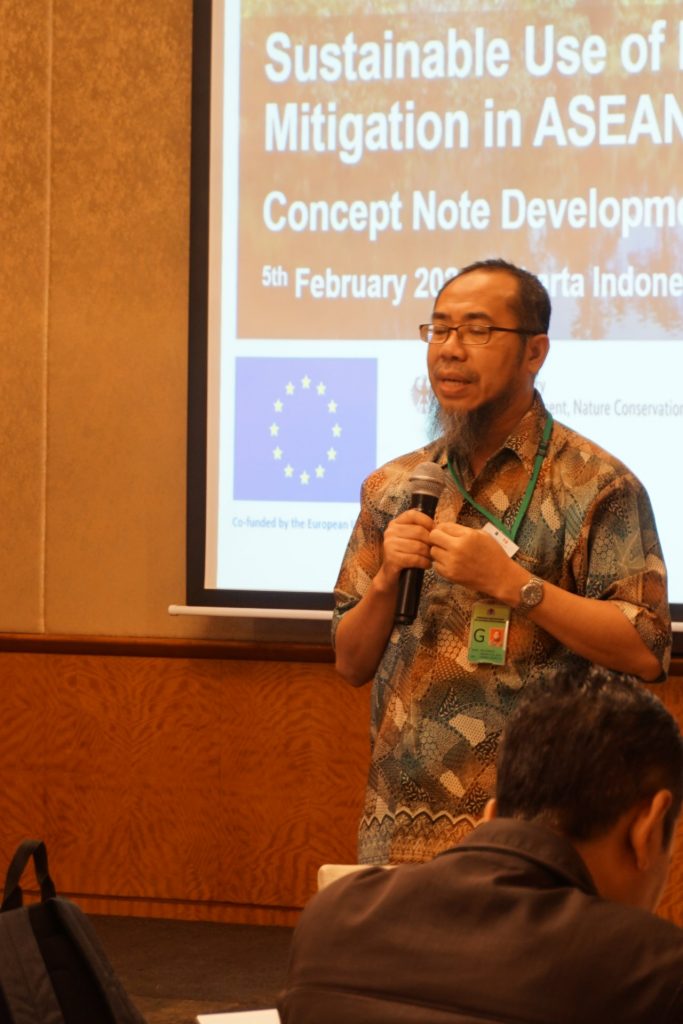
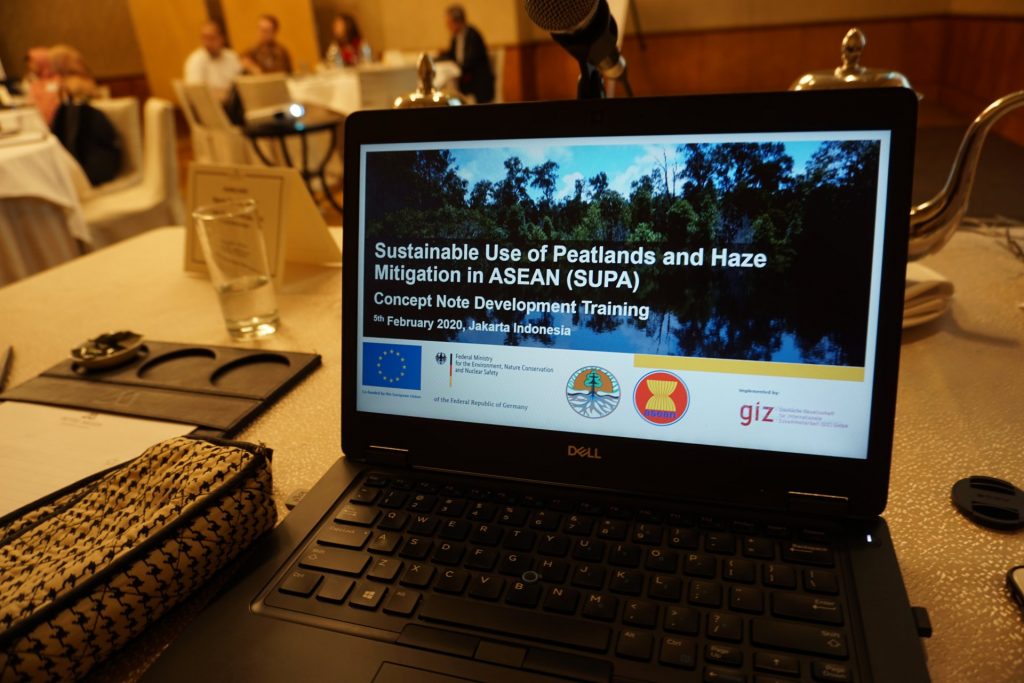
Two Concept Note Development Workshops, held in Indonesia on 5-6 February 2020 and in Malaysia on 13-14 February 2020, initiated the restricted call for proposals. The goal of these workshops was to improve the capacities of AMS state agencies to develop project-related concept notes to apply for SUPA Component 1 funds. 

On 13th March 2020, the third Concept Note Development Workshop was held in Myanmar. Due to increasing concerns in the region over the Covid-19 pandemic, this workshop was the last to be held in person. 

Increasing travel restrictions and lockdowns being implemented in several ASEAN countries forced the SUPA Component 1 team to adopt a new strategy to conduct the workshops with the remaining ASEAN AMS. Taking into account that access to internet and stable internet connection may not always be a reality across the region to support an online live workshop, SUPA Component 1 team decided to adapt the Concept Note Development Workshops content into a visual presentation supported by audio to allow all participants to enter the restricted call for proposals and therefore the SUPA Component 1 funds. The online workshop package was sent to participants on the 3rd April 2020, with the submission deadline on 18th May 2020.

To date, we have received Concept Notes from most countries, while a few requested for an extension of the deadline. Extensions have been granted, as it is understandable that disruptions to the approval process due to work-from-home situation is affecting many countries in the region.

Although online workshops were not the initial plan, we are all adapting into new ways in life and work to cope with these unprecedented challenges. With the collective commitment from ASEAN Member States, we are confident that the programme will adapt and move forward.

SUPA Component 1 Organizes Concept Note on Development Training for Indonesia and Malaysia

The Sustainable Use of Peatland and Haze Mitigation in ASEAN (SUPA) Component 1 has three work areas. Work area 2 focuses on specific support to ASEAN Member States (AMS) for the implementation of ASEAN Peatland Management Strategy (APMS) and National Action Plan for Peatlands (NAPPs) via SUPA funds. The support will be done through funding allocation which will be distributed to eligible AMS through a restricted call for proposals.

GIZ Concept Note on Development Training, held for Indonesia on 5-6 February 2020 and for Malaysia on 13-14 February 2020, was the first activity related to Work Area 2. The goal of these workshops was to improve the capacities of AMS to develop project-related concept note drafts to apply for SUPA funds. During the two-day workshop, participants of relevant units from the Ministry of Environment and Forestry (KHLK) in Indonesia and the Ministry of Water, Land and Natural Resources (KATS) in Malaysia as well as other ministries and state agencies with a mandate related to peatland and fire issues brainstormed ideas and presented initial concept note drafts for feedback.

The national focal points for peatlands In Indonesia and Malaysia, KHLK and KATS, thanked for the provision of funds to support sustainable peatland management on ground, and expressed appreciation for the training opportunity to develop integrated and high-quality concept notes. 

SUPA National Workshop in Indonesia and Malaysia

Sustainable Use of Peatland and Haze Mitigation in ASEAN (SUPA) Component 1 and Directorate of Peat Degradation Control (DPKG) of the Ministry of Environment and Forestry of the Republic of Indonesia (KLHK) held the launching of SUPA’s Pilot Site in Indonesia on 4th February 2020 in Jakarta.

During the workshop, KLHK announced that the pilot site of SUPA Component 1 in Indonesia will be located in the Aceh Province. There are 3 peat areas in Aceh namely Tripa, Singkil and Kluet. Pilot villages will be selected based on the National Medium-term Planning (RPJMN), taking into considerations criteria like status of the land (preferably land should have a clear ownership status and the limits should be clearly delineated), the willingness of local stakeholders to get involved, as well as lessons learnt from sites that have high potential for upscaling.

In the opening remarks, the Director of Peat Degradation Control SPM Budi Susanti thanked EU and BMU for the continued support to Indonesia, especially in peat management. She also hoped that SUPA can help contribute further evidence towards effective and efficient approaches in protecting and managing peatlands in Indonesia.

Meanwhile, on 12th February 2020, Sustainable Use of Peatland and Haze Mitigation in ASEAN (SUPA) Component 1 and the Biodiversity and Forestry Management Division of Ministry of Water, Land and Natural Resources (KATS) of Malaysia organised “Workshop on Generating Pilot Experience in Malaysia” in Putrajaya.

During the workshop, participants discussed the current status and condition of peatlands and how they are managed in Malaysia; shared practical experiences on sustainable use of peatland and fire management; discussed a set of criteria for selecting the pilot site; and identified potential sites within Pahang, Selangor and Sarawak which fit to the selection criteria of the pilot site. KATS collected all the pilot site proposals and arguments, and will present them to the Jawatankuasa Induk Tanah Gambut Malaysia (National Peatland Steering Committee) for the final decision on the selected pilot site. The pilot project aspires to demonstrate how a peatland, within the landscape or peatland hydrological unit, can be restored and/or rehabilitated through sustainable peatland management options.

EU to support sustainable use of peatland and haze mitigation in ASEAN

JAKARTA, 15 November 2019 – To support ASEAN’s endeavours in combating transboundary haze pollution and peatland fires, the European Union (EU) launched the civil society component of the EUR 24 million programme to support Sustainable Use of Peatland and Haze Mitigation in ASEAN (SUPA). The overall programme is funded with EUR 20 million contributions from the EU and EUR 4 million from the German Government.

This new initiative supports the objectives of the ASEAN Peatland Management Strategy through collective actions and enhanced cooperation that improves sustainable peatland management, mitigates the impacts of climate change, manages the risk of wild fires and reduces trans-boundary regional haze. The initiative also supports and sustains local livelihoods while contributing to global environmental management.

The programme is also critical in tackling the root causes of peatland fires in mitigating the impacts of climate change, especially in the wake of recent peatland and forest fires in the region in 2019, with a total of 857,755 hectares burned, an increase from the 529,266 hectares that burned in 2018 and on top of the 2.6 million hectares burned in 2015[1].

The EU’s support to ASEAN’s sustainable peatland management is composed of two mutually reinforcing main components, namely governmental approach and non-state actor approach. The governmental approach is implemented by Deutsche Gesellschaft für Internationale Zusammenarbeit (GIZ) while the non-state actor approach is implemented by World Resources Institute Indonesia in collaboration with Tropical Rainforest Conservation & Research Centre Malaysia and the IDH Sustainable Trade Initiative. The two components will work collaboratively to support ASEAN in addressing the root causes of forest fires.

The EU Ambassador to ASEAN Igor Driesmans hopes that this new programme will encourage the ASEAN region to become more resilient and proactive in sustainable peatland management. Although much has been achieved since 2015, to fully realise the ASEAN Transboundary Haze Agreement, efforts to mitigate peatland fires and curb the adverse impacts of climate change requires sustained attention.

The Secretary-General of ASEAN Dato Lim Jock Hoi highlighted that the spirit of ASEAN cooperation in addressing regional and transboundary issues remains strong and it is augmented through this year’s ASEAN Chairmanship theme: ‘Advancing Partnership for Sustainability’. ASEAN cooperation and its mechanisms will continue to complement and add-value to the ASEAN Member States’ priorities in many fronts, while simultaneously contributing to the implementation of the UN SDGs.

Further, Dato Lim mentioned that together with the ASEAN-EU High-Level Dialogue on Environment and Climate Change held earlier this month in Bangkok, and the project on Biodiversity Conservation and Management of Protected Areas in ASEAN, SUPA programme is another opportunity provided by the ASEAN-EU cooperation framework which will act as foundation of knowledge to help ASEAN Member States and relevant institutions in achieving enhanced capacity and regional coordination in sustainable management of forest and peatlands.

Ambassador Driesmans also pointed out that the SUPA Programme marks a significant milestone for the EU and ASEAN, as this is the first regional cooperation under the EU-ASEAN Multi-annual Indicative Programme in the area of climate change. This showcases that both regions are committed to tackle the root causes of peatland fires and mitigate the adverse impacts of climate change. In addition, he highlighted that the programme contributes to the EU’s commitment to address global environmental issues, in particular to support mitigation of carbon emissions from carbon-rich peatland areas, as well as conservation of the unique biodiversity of peatland ecosystems.

[1] http://sipongi.menlhk.go.id/pdf/luas_kebakaran