IFAD, together with ASEAN invest in reducing transboundary haze pollution in Southeast Asia

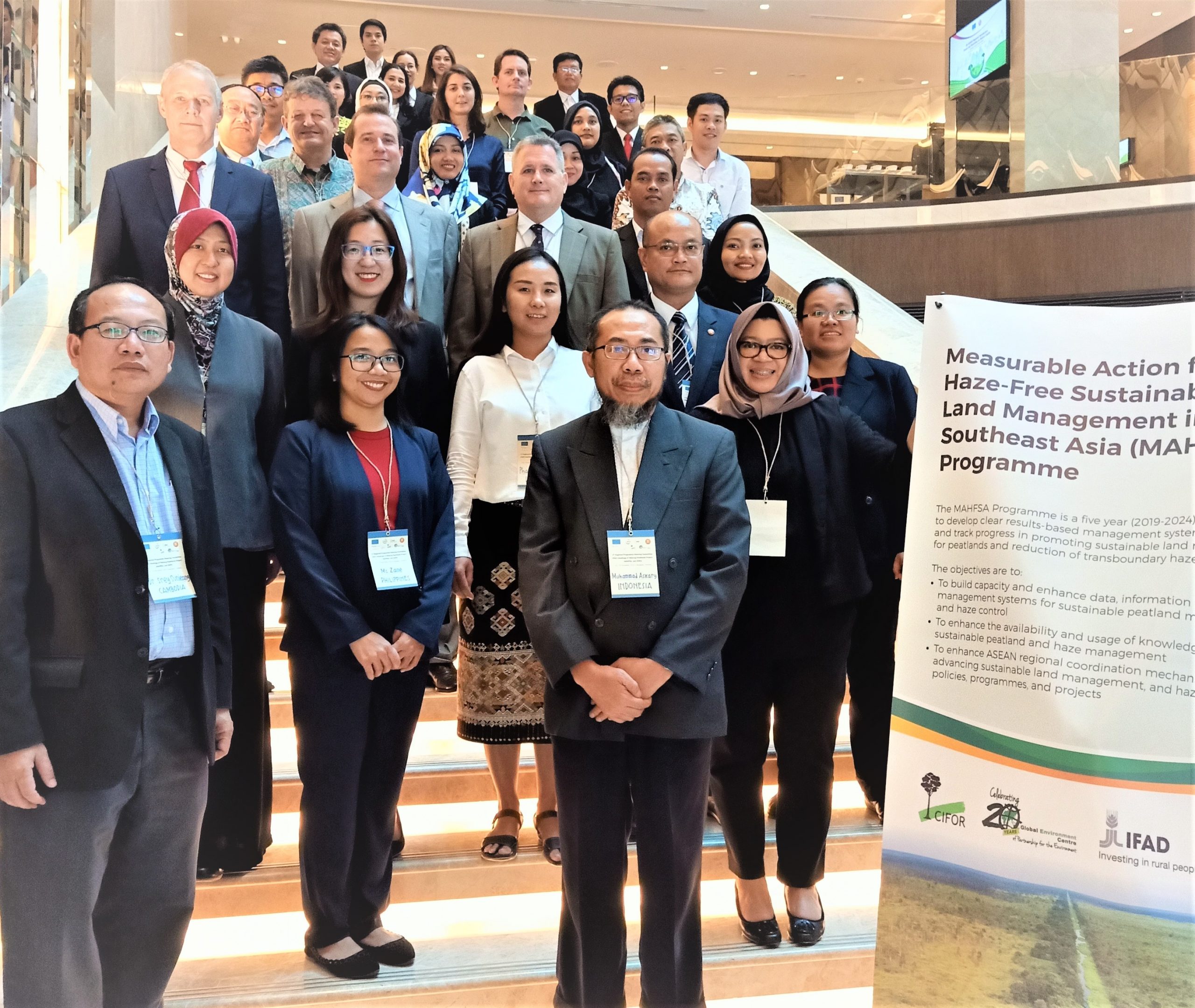
Bangkok, 27 November 2019 – The International Fund for Agricultural Development (IFAD) and ASEAN Secretariat have launched the Measurable Action for Haze-Free Sustainable Land Management in Southeast Asia (MAHFSA) Programme today to reduce transboundary haze pollution and its impacts in Southeast Asia.

It is estimated that haze pollution affects the health of 50 million people in the region. IFAD is granting US$ 3.5 million to ASEAN towards financing the programme. The ASEAN Secretariat, the Center for International Forestry Research, and the Global Environment Centre will jointly implement the regional programme. The programme is a follow-up to the GEF4-IFAD ASEAN Peatland Forests Project 2009-2014, and aims to support ASEAN Member States to achieve the goals of the ASEAN Peatland Management Strategy, the key targets of the ASEAN Programme on Sustainable Management of Peatland Ecosystems, and support the implementation of the ASEAN Haze-Free Roadmap.

In close collaboration with ASEAN Member States, the programme aims to assist and facilitate the collection and analysis of land management and haze-related information to predict, monitor and prevent fires and haze. It will also strengthen the ASEAN regional coordination mechanisms for advancing sustainable land management, haze prevention policies, programmes, and projects, through the establishment of a regional multi-stakeholder platform, and mobilise increased flow of financial and human resources for haze-free programmes and projects.

“The Programme is critical to advancing sustainable land management, and haze prevention policies in the region,” said Fabrizio Bresciani, IFAD Regional Economist, Asia and Pacific. “Among other things, it seeks to develop an estimated US$1.5 billion investment programme that prioritizes national and regional actions on haze elimination and sustainable peatland management,” he added.

In his remarks, Dr. Vong Sok, Assistant Director of Environment Division of ASEAN Secretariat, emphasised that cooperation and multi-stakeholder engagement at different levels are vital to address root causes, effects and risks of haze issues, in order to move towards the prosperity of a clean and green ASEAN to promote sustainable development for the benefit of our people.

He also reiterated that with ASEAN’s theme this year: ‘Advancing Partnership for Sustainability’, the Member States have reaffirmed their commitment to address transboundary haze issues through closer cooperation and collaboration.
EU to support sustainable use of peatland and haze mitigation in ASEAN

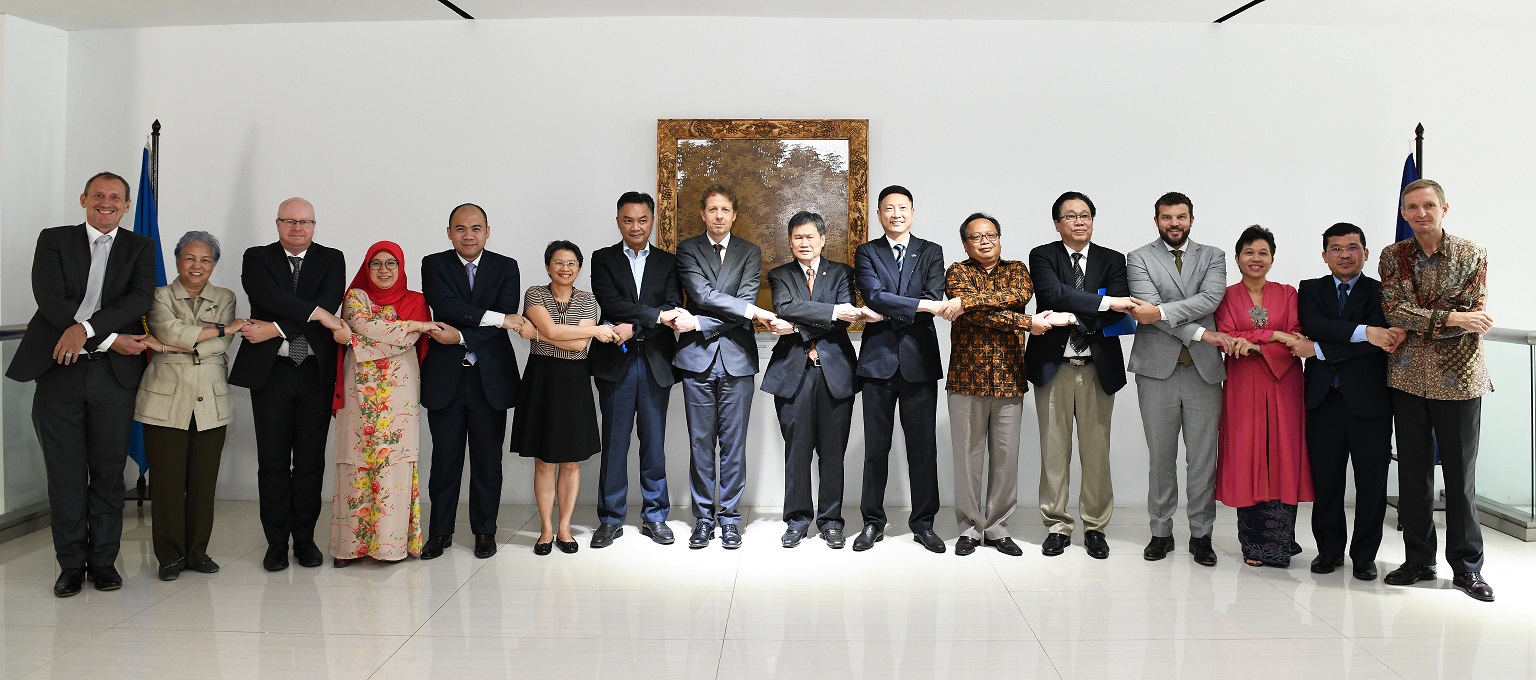
JAKARTA, 15 November 2019 – To support ASEAN’s endeavours in combating transboundary haze pollution and peatland fires, the European Union (EU) launched the civil society component of the EUR 24 million programme to support Sustainable Use of Peatland and Haze Mitigation in ASEAN (SUPA). The overall programme is funded with EUR 20 million contributions from the EU and EUR 4 million from the German Government.

This new initiative supports the objectives of the ASEAN Peatland Management Strategy through collective actions and enhanced cooperation that improves sustainable peatland management, mitigates the impacts of climate change, manages the risk of wild fires and reduces trans-boundary regional haze. The initiative also supports and sustains local livelihoods while contributing to global environmental management.

The programme is also critical in tackling the root causes of peatland fires in mitigating the impacts of climate change, especially in the wake of recent peatland and forest fires in the region in 2019, with a total of 857,755 hectares burned, an increase from the 529,266 hectares that burned in 2018 and on top of the 2.6 million hectares burned in 2015[1].

The EU’s support to ASEAN’s sustainable peatland management is composed of two mutually reinforcing main components, namely governmental approach and non-state actor approach. The governmental approach is implemented by Deutsche Gesellschaft für Internationale Zusammenarbeit (GIZ) while the non-state actor approach is implemented by World Resources Institute Indonesia in collaboration with Tropical Rainforest Conservation & Research Centre Malaysia and the IDH Sustainable Trade Initiative. The two components will work collaboratively to support ASEAN in addressing the root causes of forest fires.

The EU Ambassador to ASEAN Igor Driesmans hopes that this new programme will encourage the ASEAN region to become more resilient and proactive in sustainable peatland management. Although much has been achieved since 2015, to fully realise the ASEAN Transboundary Haze Agreement, efforts to mitigate peatland fires and curb the adverse impacts of climate change requires sustained attention.

The Secretary-General of ASEAN Dato Lim Jock Hoi highlighted that the spirit of ASEAN cooperation in addressing regional and transboundary issues remains strong and it is augmented through this year’s ASEAN Chairmanship theme: ‘Advancing Partnership for Sustainability’. ASEAN cooperation and its mechanisms will continue to complement and add-value to the ASEAN Member States’ priorities in many fronts, while simultaneously contributing to the implementation of the UN SDGs.

Further, Dato Lim mentioned that together with the ASEAN-EU High-Level Dialogue on Environment and Climate Change held earlier this month in Bangkok, and the project on Biodiversity Conservation and Management of Protected Areas in ASEAN, SUPA programme is another opportunity provided by the ASEAN-EU cooperation framework which will act as foundation of knowledge to help ASEAN Member States and relevant institutions in achieving enhanced capacity and regional coordination in sustainable management of forest and peatlands.

Ambassador Driesmans also pointed out that the SUPA Programme marks a significant milestone for the EU and ASEAN, as this is the first regional cooperation under the EU-ASEAN Multi-annual Indicative Programme in the area of climate change. This showcases that both regions are committed to tackle the root causes of peatland fires and mitigate the adverse impacts of climate change. In addition, he highlighted that the programme contributes to the EU’s commitment to address global environmental issues, in particular to support mitigation of carbon emissions from carbon-rich peatland areas, as well as conservation of the unique biodiversity of peatland ecosystems.

[1] http://sipongi.menlhk.go.id/pdf/luas_kebakaran

ASEAN and Global Green Growth Institute explore collaboration

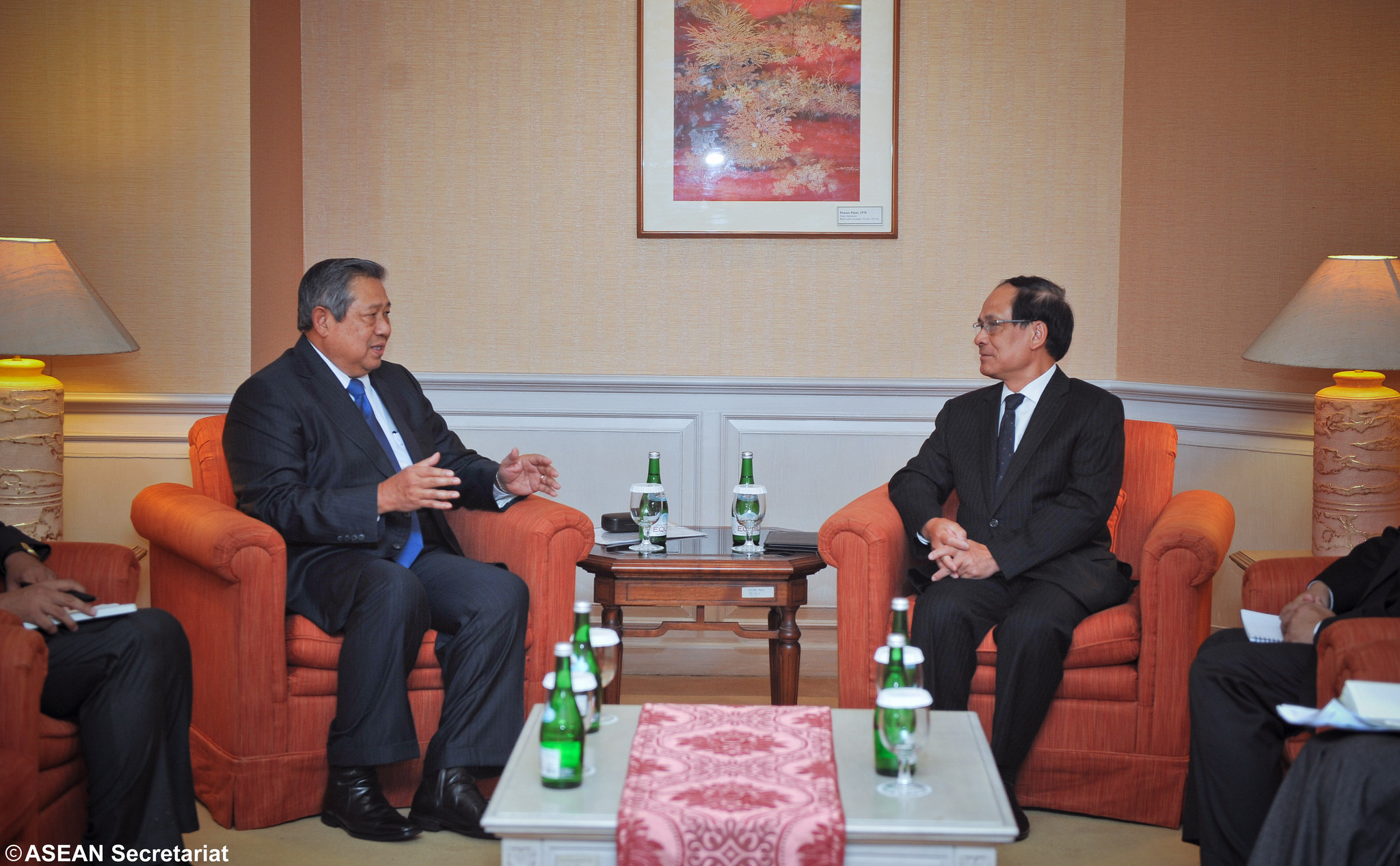
JAKARTA, 12 April 2016 – Secretary-General of ASEAN, H.E. Le Luong Minh, welcomed the President of Global Green Growth Institute (GGGI) and former President of the Republic of Indonesia, H.E. Dr. Susilo Bambang Yudhoyono, yesterday at the ASEAN Secretariat to discuss potential collaboration on green growth.  Currently, five ASEAN Member States are members of GGGI: Cambodia, Indonesia, the Philippines, Thailand and Viet Nam.

 Dr. Yudhoyono highlighted the need to work collaboratively to ensure that green growth concept be adopted by all countries, especially by the emerging and developing economies. He updated on the progress of GGGI’s work and projects with governments, including a number of ASEAN Member States and international organisations. He reiterated the need to support countries in fulfilling their targets to curb the greenhouse gas emission, as pledged in their respective Intended Nationally Determined Contributions to the United Nations Framework Convention on Climate Change.  He proposed four core areas which could serve as cooperation with ASEAN, i.e. energy, green city development, land use and water conservation.

With Southeast Asia being one of the most vulnerable regions to climate change impacts, Secretary-General Minh emphasized that addressing climate change and promoting low carbon development is one of the priorities of ASEAN. He also shared on ASEAN’s efforts in addressing climate change, such as through promoting sustainable peatland management to reduce greenhouse gas emission from peatland fires, and implementing the ASEAN Agreement on Transboundary Haze Pollution. Secretary-General Minh also highlighted that ASEAN, while being rich in biodiversity but remained vulnerable to habitat and biodiversity loss due to climate change, places high importance on biodiversity conservation, as reflected in the establishment of a dedicated centre for biodiversity based in Los Banos, Philippines. He recognized that there are synergies and mutually-enforcing action-plans between ASEAN Vision 2025 and the United Nations Sustainable Development Goals.

Both sides agreed that there is a convergence of interests and opportunities for collaboration, and hoped to enhance broader and deeper cooperation. Dr. Yudhoyono also encouraged ASEAN to continue to be in the driving seat in addressing global issues, and that the collaboration between ASEAN and the GGGI can be a showcasefor other potential partners to follow suit.

Indonesia Deposits Instrument of Ratification of the ASEAN Agreement on Transboundary Haze Pollution

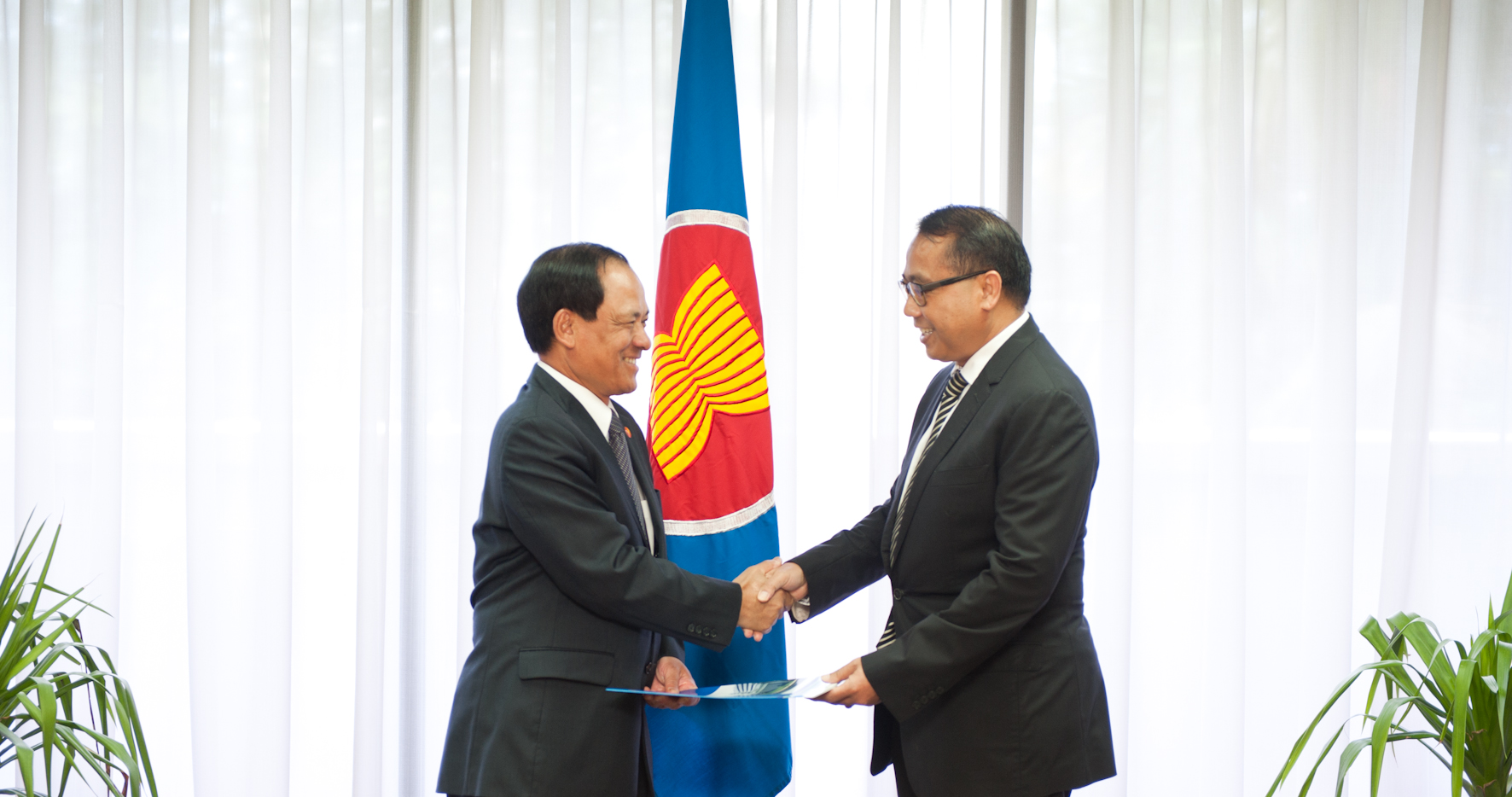
JAKARTA, 20 January 2015 – H.E. I Gusti Agung Wesaka Puja, the Director General for ASEAN Cooperation, Ministry of Foreign Affairs of Indonesia, today deposited Indonesia’s Instrument of Ratification of the ASEAN Agreement on Transboundary Haze Pollution with H.E. Le Luong Minh, Secretary-General of ASEAN.

Ambassador Puja conveyed his Government’s appreciation to the ASEAN Secretariat and the other ASEAN Member States (AMS) for the support and encouragement extended to Indonesia in concluding the ratification process. He informed SG Minh that the ratification of the Agreement was approved by Indonesia’s Parliament through Law No. 26 Year 2014.

SG Minh congratulated Indonesia for the ratification and commended the country for its efforts and commitment to working collectively with other AMS to address the transboundary haze pollution issues under the framework of the ASEAN Agreement on Transboundary Haze Pollution.

The Governments of the ten ASEAN Member Countries signed the ASEAN Agreement on Transboundary Haze Pollution (AATHP) on 10 June 2002 in Kuala Lumpur, Malaysia, and it entered into force on 25 November 2003. The Agreement is the first regional arrangement in the world that binds a group of contiguous states to tackle transboundary haze pollution resulting from land and forest fires. It has also been considered as a global role model for the tackling of transboundary issues. With Indonesia’s ratification, the Agreement has now been ratified by all ASEAN Member States.

ASEAN Secretariat and IFAD Ink Deal to Promote Sustainable Development of Peatlands and Address Transboundary Smoke Haze Pollution

A Project Grant Agreement to implement the “Rehabilitation and Sustainable Use of Peatland Forests in Southeast Asia” project was recently signed by the ASEAN Secretariat and the International Fund for Agricultural Development (IFAD). The Agreement was signed by Dr Surin Pitsuwan, Secretary-General of ASEAN and Mr Lennart Båge, President of IFAD.

The four-year project received a grant of US$4.3 million from the Global Environment Facility (GEF) and will mobilise an additional US$10.2 million in co-financing during the implementation phase. IFAD has been designated as the implementing agency for GEF while the ASEAN Secretariat will coordinate the execution of the project in ASEAN Member States.

Dr Surin expressed his appreciation to GEF and IFAD for their support to this project. He noted that “the project will help to address the major transboundary environmental problem – smoke haze pollution – facing the ASEAN region.”

He added, “More importantly, this project will also contribute towards addressing the global climate change crisis. More and more international partners have recognised the value and mutual benefits of working with ASEAN and the ASEAN Secretariat and capitalising on its robust intergovernmental framework for programme design, implementation and monitoring. This GEF/IFAD project is another demonstration of this confidence in ASEAN.”

ASEAN has more than 30 million hectares of peatlands comprising 60% of global tropical peatland resource. Peatlands are primarily water-logged areas containing centuries-old decayed vegetative matter up to several metres deep. While being significantly important for development, livelihood, environment and biodiversity, unsustainable practices and adverse climate conditions have severely degraded the peatlands, making them the primary source of fires and smoke haze that affects the region regularly. Degraded peatlands are also a major source of greenhouse gases contributing to global warming. ASEAN, through the ASEAN Agreement on Transboundary Haze Pollution adopted in 2002, is undertaking a concerted effort to address forest and land fires in fire prone areas such as the peatlands.

This project takes a holistic approach to promote sustainable management of peatlands, sustain local livelihoods, reduce risk of fire and associated smoke haze, and contribute to global environmental efforts particularly biodiversity conservation and climate change mitigation. It consists of both national activities undertaken in participating countries with major peatland areas, namely Indonesia, Malaysia, the Philippines and Viet Nam and regional activities involving all ASEAN States to share best practices, technology and experience. On-the-ground activities will be undertaken at several identified peatland areas together with the local governments, private sector and local community.